
Heritage Timelines · Study Edition · Panel 9
Charlemagne and the Crusades
The Medieval Kingdoms · c. AD 700–1300
A study of Panel 9 of Adams' chart: Charlemagne, the Crusades and the Medieval Kingdoms
- 205 pages
- 224 illustrations
- 195 sections
- PDF · 35.8 MB
- + panel 9 to print
This book walks through panel 9 of Adams' chart, c. AD 700–1300, detail by detail: Charlemagne and the Crusades; Reading the chart; Two histories above one time scale; The Kaaba at Mecca; A sanctuary represented through an older account; Bede among the historical witnesses; The battle of Tours; The encounter at Tours. Each page sets Adams' own words and pictures beside the sources behind them.
Digital PDF. Read it on any screen, zoom into every detail, print the pages you need. Also included: the complete panel 9 to print and assemble (9 sheets, US Letter or A4, about 55 x 61 cm once assembled). No printed book or chart is shipped.
Look inside
Real pages from the book. Tap a page to enlarge it.
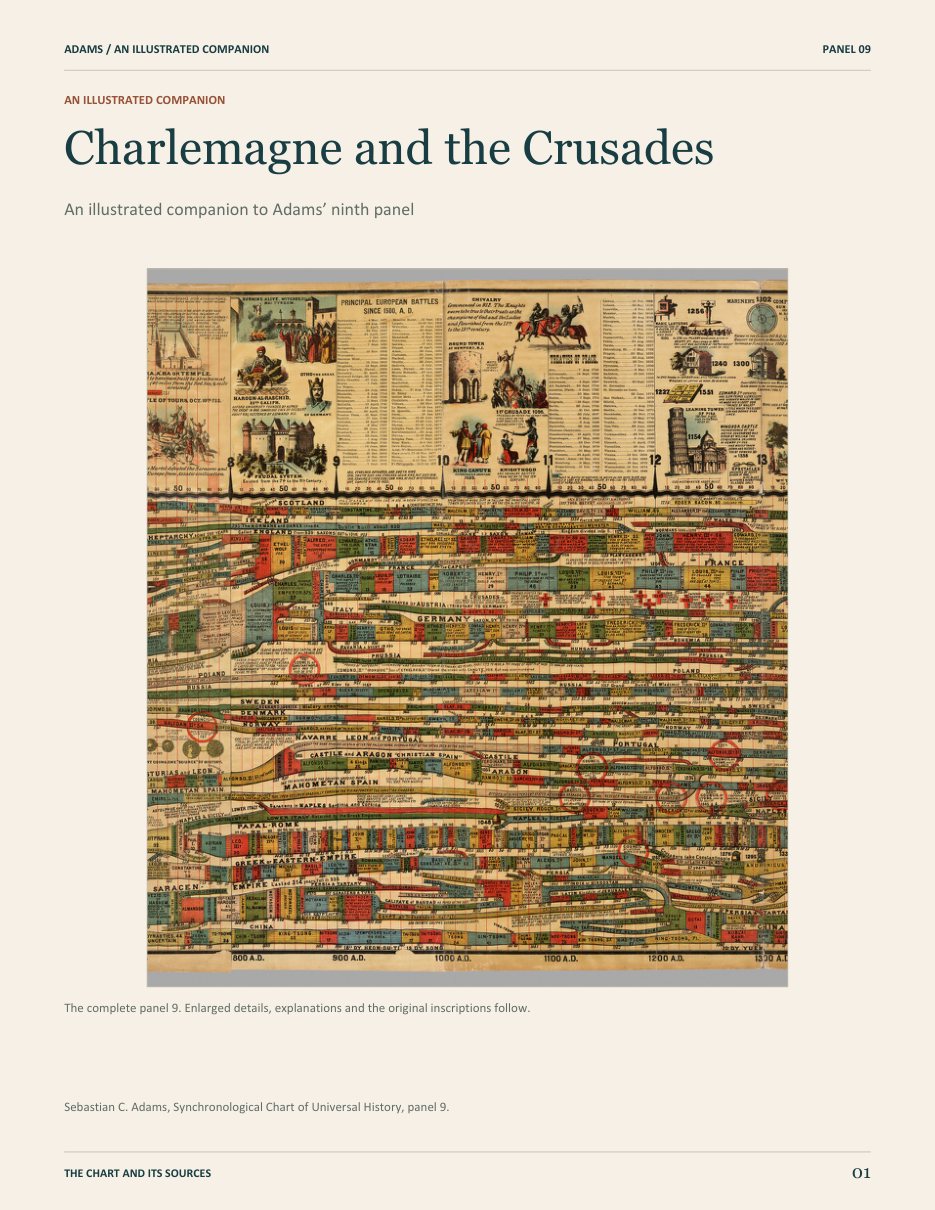 Charlemagne and the Crusades
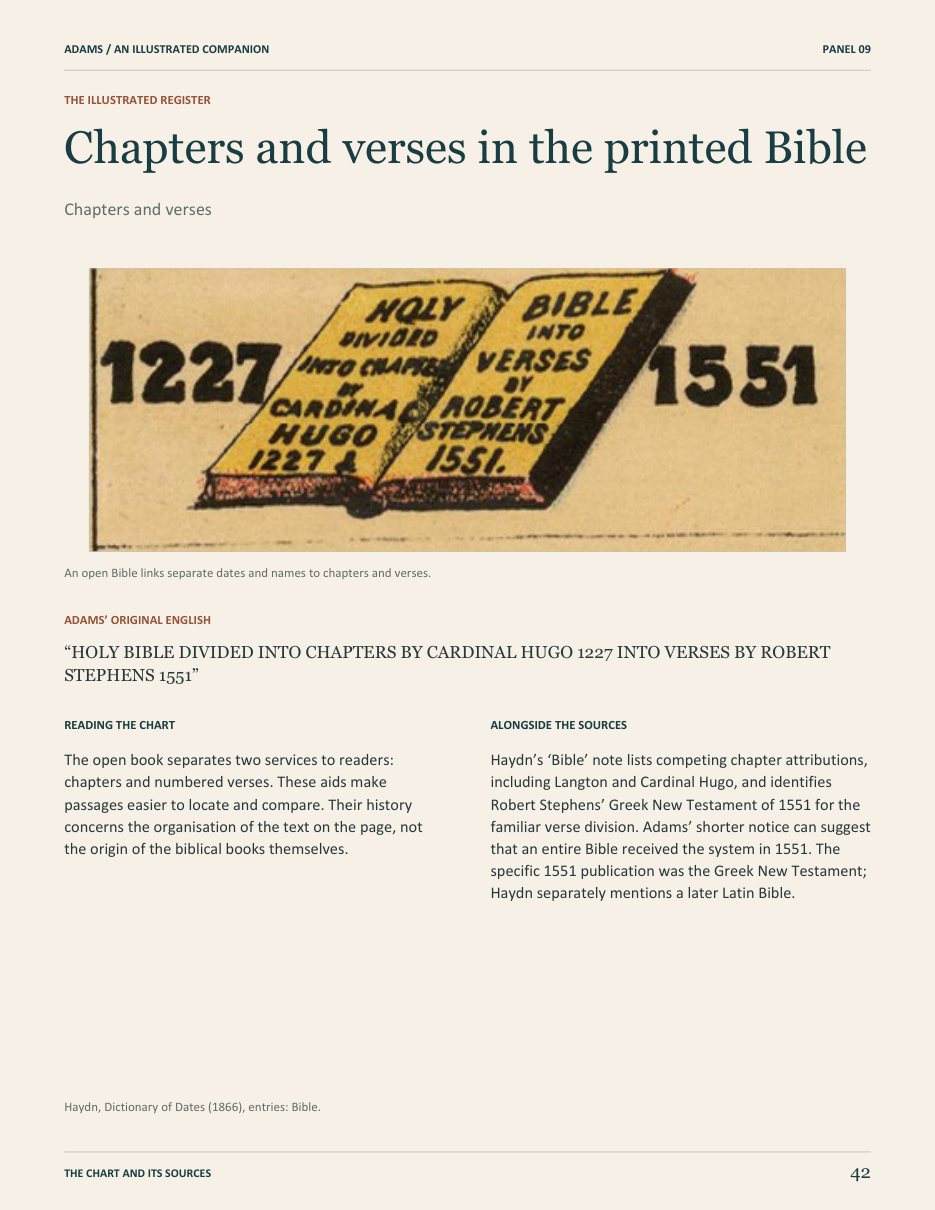 Chapters and verses in the printed Bible
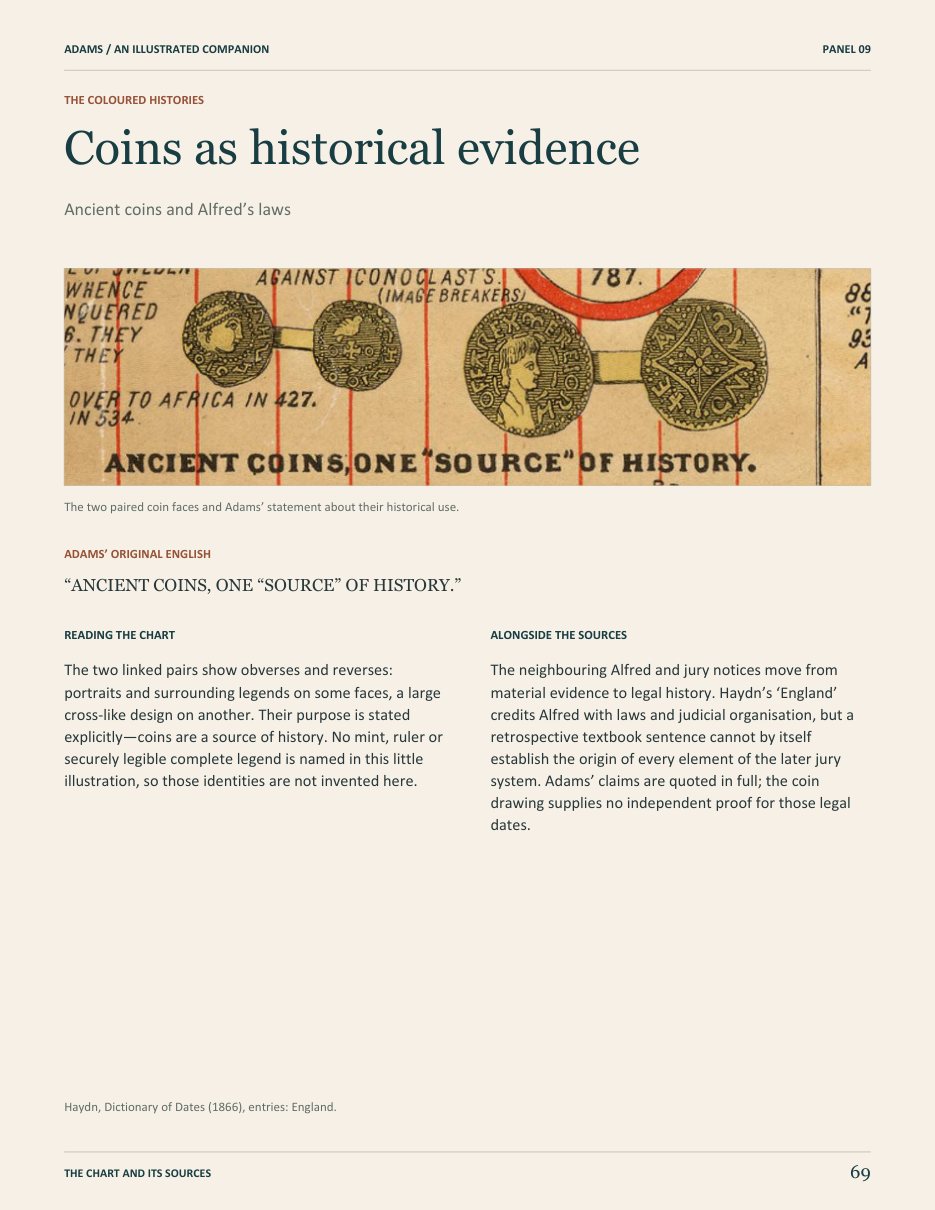 Coins as historical evidence
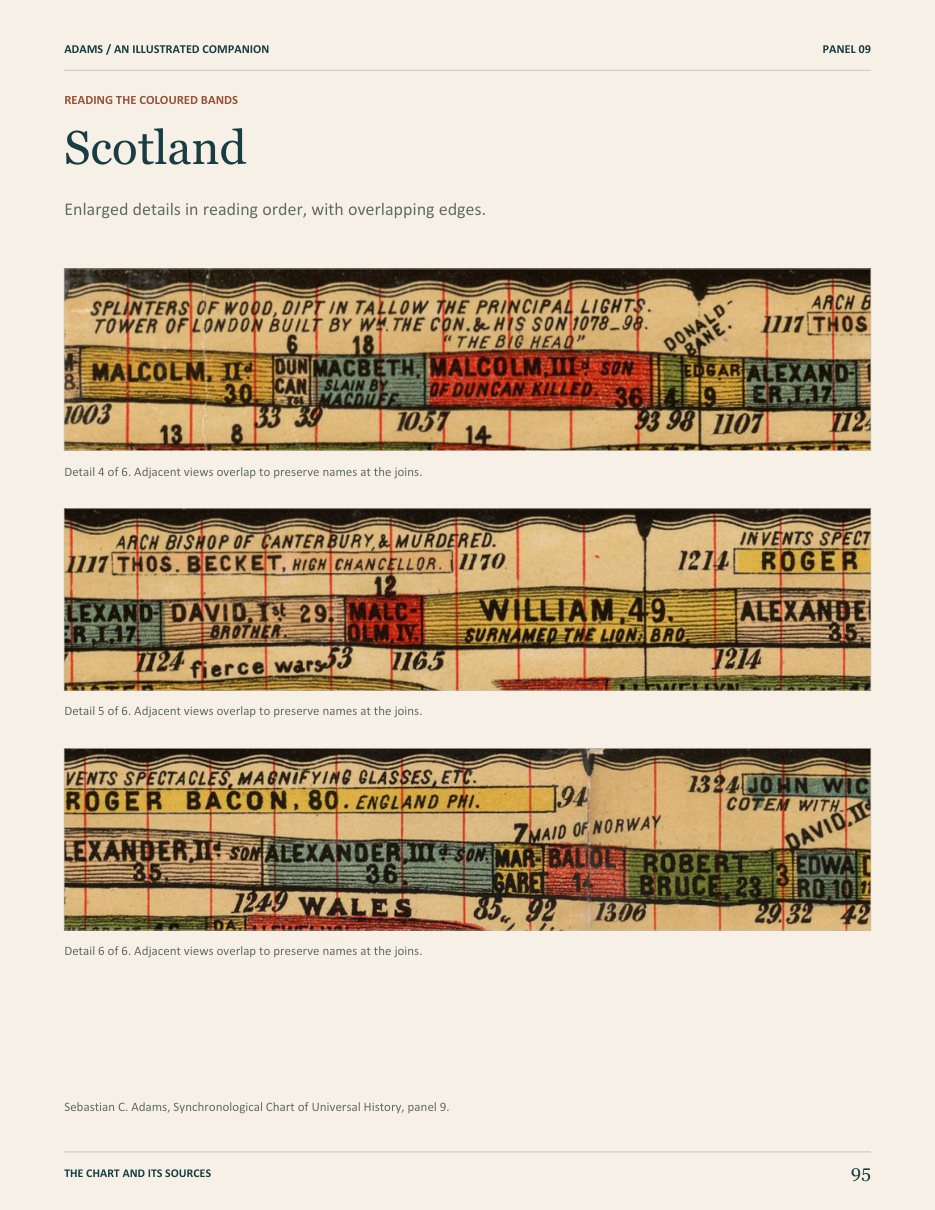 Scotland
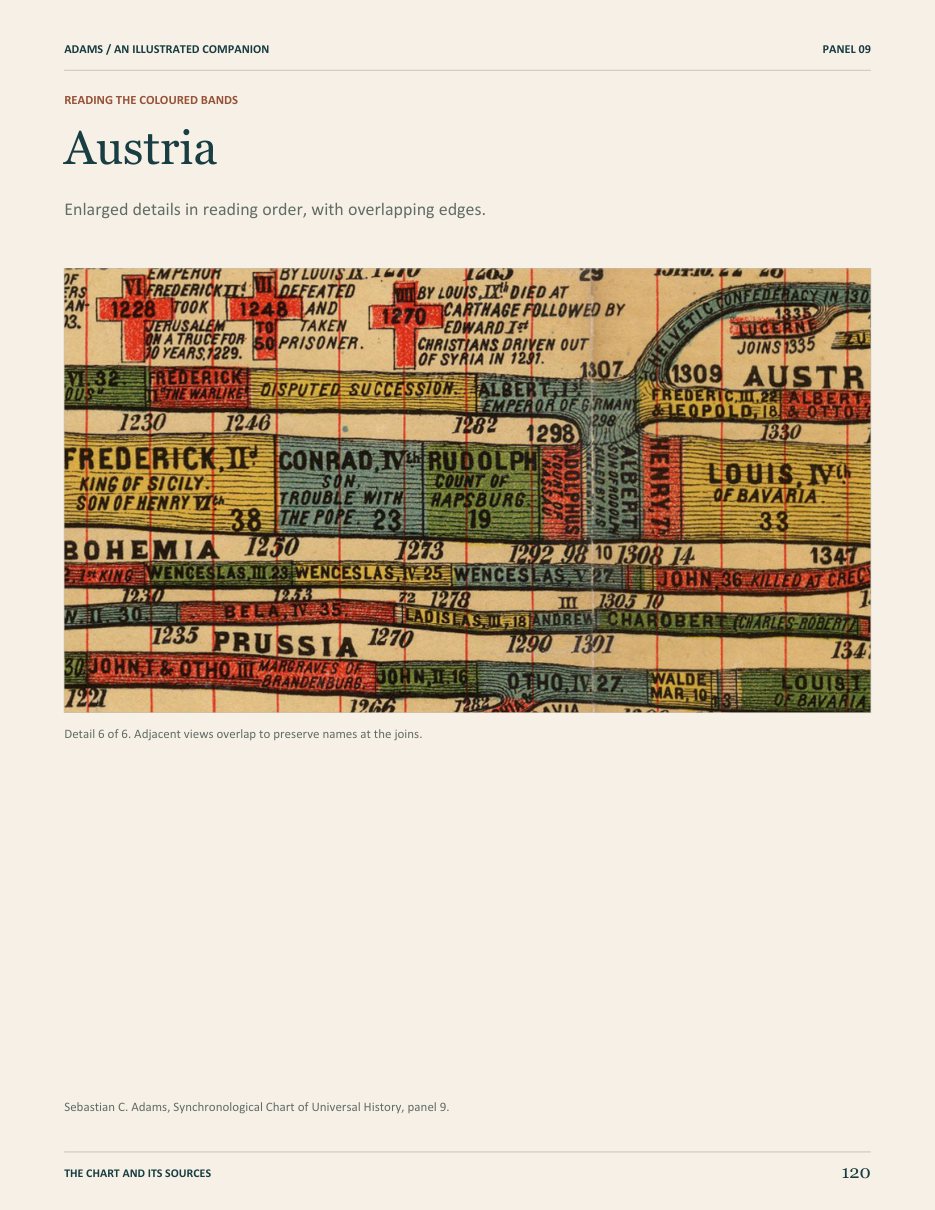 Austria
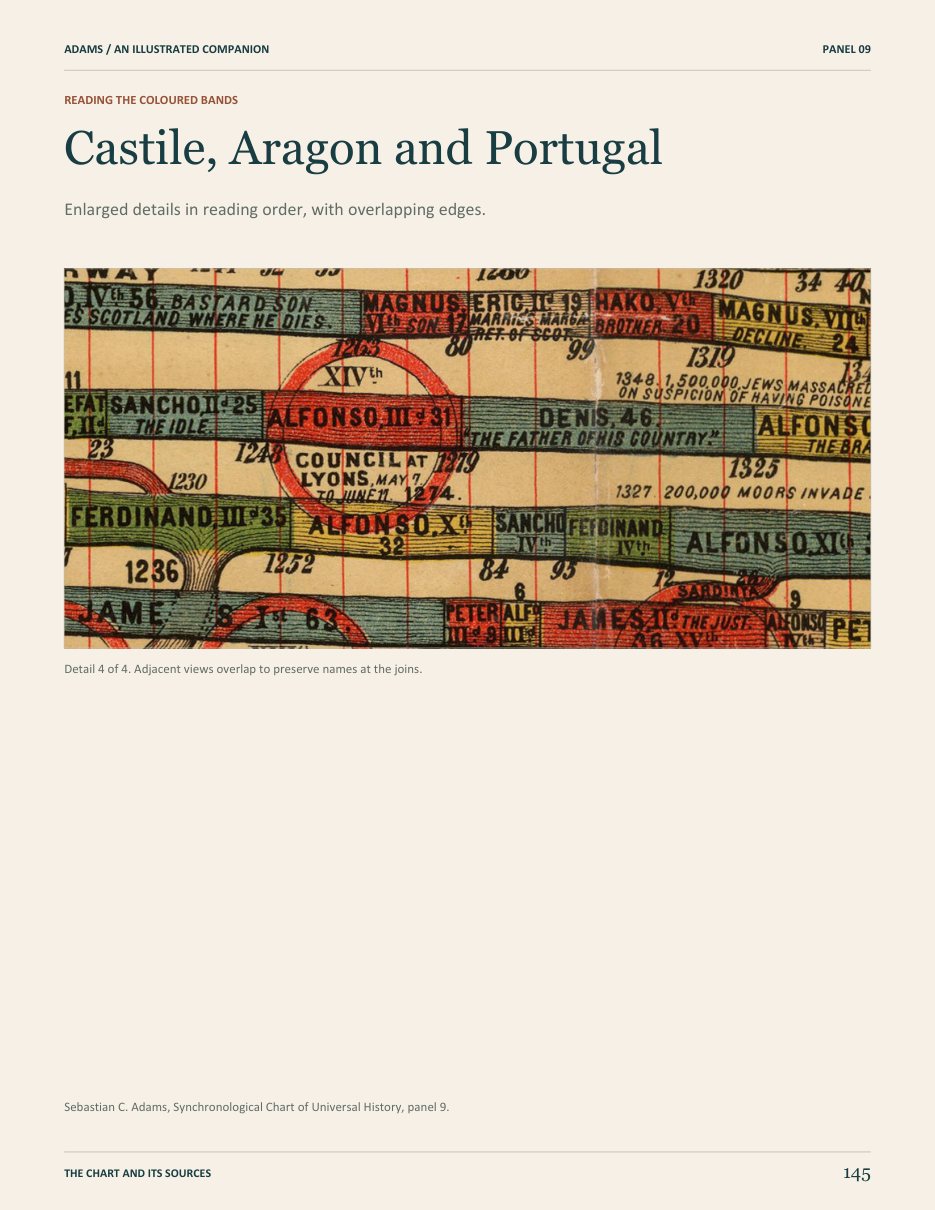 Castile, Aragon and Portugal
What you'll find
- Adams' original wording, transcribed with his own spelling
- Enlarged details of the chart, each with its caption and explanation
- The books Adams relied on, identified and compared with his text
- The complete panel 9, ready to print at large size (9 sheets, US Letter or A4, about 55 x 61 cm once assembled)
Print and study
You may print the pages for your own study, your family or your classroom, as often as you need. Corrections and improvements to this edition are sent free to buyers. Please do not share or resell the file.
Use it beside the chart itself: Panel 9 on adamschart.org lets you zoom into every scene the book explains.
Contents
- Charlemagne and the Crusadesp. 7
- Reading the chartp. 8
- Two histories above one time scalep. 10
- The Kaaba at Meccap. 11
- A sanctuary represented through an older accountp. 12
- Bede among the historical witnessesp. 13
- The battle of Toursp. 14
- The encounter at Toursp. 15
- Burning alive and martyrdomp. 16
- A general scene of persecutionp. 17
- Haroun al Raschidp. 18
- Haroun al Raschidp. 19
- Otho the Greatp. 20
- Otho the Greatp. 21
- Universities and their foundation traditionsp. 22
- The feudal systemp. 23
- The castle and the feudal systemp. 24
- A later reference table inside the medieval picture fieldp. 25
- Principal European battles — 1p. 26
- Principal European battles — 2p. 27
- Principal European battles — 3p. 28
- The ideals of chivalryp. 29
- The round tower at Newportp. 30
- Newport’s round towerp. 31
- The first crusadep. 32
- The first crusadep. 33
- King Canutep. 34
- Canute reproving his courtiersp. 35
- Knighthoodp. 36
- The accoladep. 37
- How to use the treaty tablep. 38
- Treaties of peace — 1p. 39
- Treaties of peace — 2p. 40
- Treaties of peace — 3p. 41
- Hastings in one sentencep. 42
- Magic lanternsp. 43
- A question mark about an inventionp. 44
- The pilloryp. 45
- Punishment and its legal endpointp. 46
- Houses, roofs and windowsp. 47
- Chapters and verses in the printed Biblep. 48
- The leaning tower of Pisap. 49
- The tower and cathedral at Pisap. 50
- Windsor and Westminsterp. 51
- Spectacles and Roger Baconp. 52
- Spectacles and Roger Baconp. 53
- The mariner’s compassp. 54
- The mariner’s compassp. 55
- Edward and the title Prince of Walesp. 56
- Scotland: a long remembered successionp. 57
- Small notices above the kingsp. 58
- Ireland and the divided kingshipp. 59
- The Saxon streams become Englandp. 60
- Norman and Plantagenet Englandp. 61
- Normandy and Flandersp. 62
- From the Franks to the Capetsp. 63
- Eight crusades in Adams’ arrangementp. 64
- Italy and Burgundy in the imperial divisionp. 65
- Austria: march, duchy and dynastyp. 66
- Germany and the imperial titlep. 67
- The smaller western branchesp. 68
- Hungary and Bohemiap. 69
- Prussia and the smaller eastern branchesp. 70
- Poland: titles, conversions and disputed rulep. 71
- Russia and changing centres of powerp. 72
- Sweden: uncertainty remains visiblep. 73
- Denmark and Norwayp. 74
- Coins as historical evidencep. 75
- Asturias and Leonp. 76
- The Christian Iberian kingdomsp. 77
- Muslim Spain alongside the Christian kingdomsp. 78
- Southern Italy, Sicily and Venicep. 79
- The papal succession and its named sourcep. 80
- Short pontificates and crowded barsp. 81
- Later popes and the tiara drawingsp. 82
- Councils across the coloured streamsp. 83
- Nicaea and Constantinoplep. 84
- The first two Lateran councilsp. 85
- The later Lateran councilsp. 86
- The councils at Lyonsp. 87
- The Eastern Empire and the Latin interruptionp. 88
- The caliphate: title and effective authorityp. 89
- Persia, the Seljuks and emerging regional powersp. 90
- The Latin kingdom of Jerusalemp. 91
- Egypt and the Mamelukesp. 92
- The Mongol expansion and a religious attributionp. 93
- China: dynasties and overlapping conquestsp. 94
- Saxony and Bavariap. 95
- Principal European battlesp. 96
- Principal European battlesp. 97
- Treaties of peacep. 98
- Treaties of peacep. 99
- Scotlandp. 100
- Scotlandp. 101
- York, London, Becket and Baconp. 102
- Irelandp. 103
- Irelandp. 104
- The Saxon kingdoms and Englandp. 105
- The Saxon kingdoms and Englandp. 106
- The Saxon kingdoms and Englandp. 107
- The Saxon kingdoms and Englandp. 108
- England after the conquestp. 109
- England after the conquestp. 110
- Normandy and Flandersp. 111
- Normandy and Flandersp. 112
- France and the Frankish monarchyp. 113
- France and the Frankish monarchyp. 114
- France and the Frankish monarchyp. 115
- France and the Frankish monarchyp. 116
- France and the Frankish monarchyp. 117
- France and the Frankish monarchyp. 118
- The sequence of crusadesp. 119
- Italy, Burgundy and the imperial divisionp. 120
- Austriap. 121
- Austriap. 122
- Austriap. 123
- Austriap. 124
- Austriap. 125
- Austriap. 126
- Germany and the emperorsp. 127
- Germany and the emperorsp. 128
- Germany and the emperorsp. 129
- Bavaria, Savoy and Switzerlandp. 130
- Hungary and Bohemiap. 131
- Hungary and Bohemiap. 132
- Prussia and the Danubian branchesp. 133
- Prussia and the Danubian branchesp. 134
- Polandp. 135
- Polandp. 136
- Russia and the principalitiesp. 137
- Russia and the principalitiesp. 138
- Russia and the principalitiesp. 139
- Swedenp. 140
- Swedenp. 141
- Denmark and Norwayp. 142
- Denmark and Norwayp. 143
- Denmark and Norwayp. 144
- Ancient coins and Alfred’s lawsp. 145
- Asturias and Leonp. 146
- Asturias and Leonp. 147
- Castile, Aragon and Portugalp. 148
- Castile, Aragon and Portugalp. 149
- Castile, Aragon and Portugalp. 150
- Castile, Aragon and Portugalp. 151
- The Muslim kingdoms in Spainp. 152
- The Muslim kingdoms in Spainp. 153
- Naples, Sicily and Venicep. 154
- Naples, Sicily and Venicep. 155
- The papal succession, early portionp. 156
- The papal succession, middle portionp. 157
- The papal succession, later portionp. 158
- The councilsp. 159
- The councilsp. 160
- The Greek or Eastern Empirep. 161
- The Greek or Eastern Empirep. 162
- The Greek or Eastern Empirep. 163
- The caliphate and the Abbasidsp. 164
- The caliphate and the Abbasidsp. 165
- The caliphate and the Abbasidsp. 166
- Persia, the Seljuks and regional powersp. 167
- Persia, the Seljuks and regional powersp. 168
- Persia, the Seljuks and regional powersp. 169
- Egypt and the Mamelukesp. 170
- Egypt and the Mamelukesp. 171
- The Mongol empirep. 172
- The Mongol empirep. 173
- China and its dynastiesp. 174
- China and its dynastiesp. 175
- The Mameluke notice continuedp. 176
- Original readings: Saxony and Bavariap. 177
- Original readings: Burning alive and martyrdomp. 178
- Original readings: Principal European battles — continuedp. 179
- Original readings: Principal European battles — continuedp. 180
- Original readings: Principal European battles — continuedp. 181
- Original readings: King Canutep. 182
- Original readings: Treaties of peace — continuedp. 183
- Original readings: Treaties of peace — continuedp. 184
- Original readings: The pilloryp. 185
- Original readings: Windsor and Westminsterp. 186
- Original readings: Scotlandp. 187
- Original readings: Ireland — continuedp. 188
- Original readings: England after the conquestp. 189
- Original readings: France and the Frankish monarchy — continuedp. 190
- Original readings: The sequence of crusades — continuedp. 191
- Original readings: Germany and the emperorsp. 192
- Original readings: Hungary and Bohemiap. 193
- Original readings: Russia and the principalitiesp. 194
- Original readings: Denmark and Norwayp. 195
- Original readings: Castile, Aragon and Portugalp. 196
- Original readings: Naples, Sicily and Venice — continuedp. 197
- Original readings: The papal succession, later portionp. 198
- Original readings: The Greek or Eastern Empirep. 199
- Original readings: Persia, the Seljuks and regional powers — continuedp. 200
- Original readings: The Mongol empire — continuedp. 201
- Books and editionsp. 202
- Books and editionsp. 203
- Books and editionsp. 204
- Further referencesp. 205
Questions
How do I receive the book?
Right after payment, your download link appears on screen and is sent to your email address.
Is this the printed chart?
No. This is a PDF book that explains the chart. The complete chart itself is free to explore on adamschart.org.
Which devices can open it?
Any computer, tablet or phone with a PDF reader. Pages are US Letter size and print well on A4 with "fit to page".
A question or a correction?
Write to [email protected].