
Heritage Timelines · Study Edition · Panel 8
The Fall of Rome
From Empire to the Hegira · c. AD 100–700
A study of Panel 8 of Adams' chart: The Fall of Rome and the Hegira
- 165 pages
- 129 illustrations
- 154 sections
- PDF · 24.2 MB
- + panel 8 to print
This book walks through panel 8 of Adams' chart, c. AD 100–700, detail by detail: The Fall of Rome; Reading the chart; The earth at the centre; Ptolemy’s inhabited world; Jerome and the Latin Bible; Saint George and English patronage; The New Testament and its witnesses; Apologists, teachers and preserved books. Each page sets Adams' own words and pictures beside the sources behind them.
Digital PDF. Read it on any screen, zoom into every detail, print the pages you need. Also included: the complete panel 8 to print and assemble (9 sheets, US Letter or A4, about 55 x 61 cm once assembled). No printed book or chart is shipped.
Look inside
Real pages from the book. Tap a page to enlarge it.
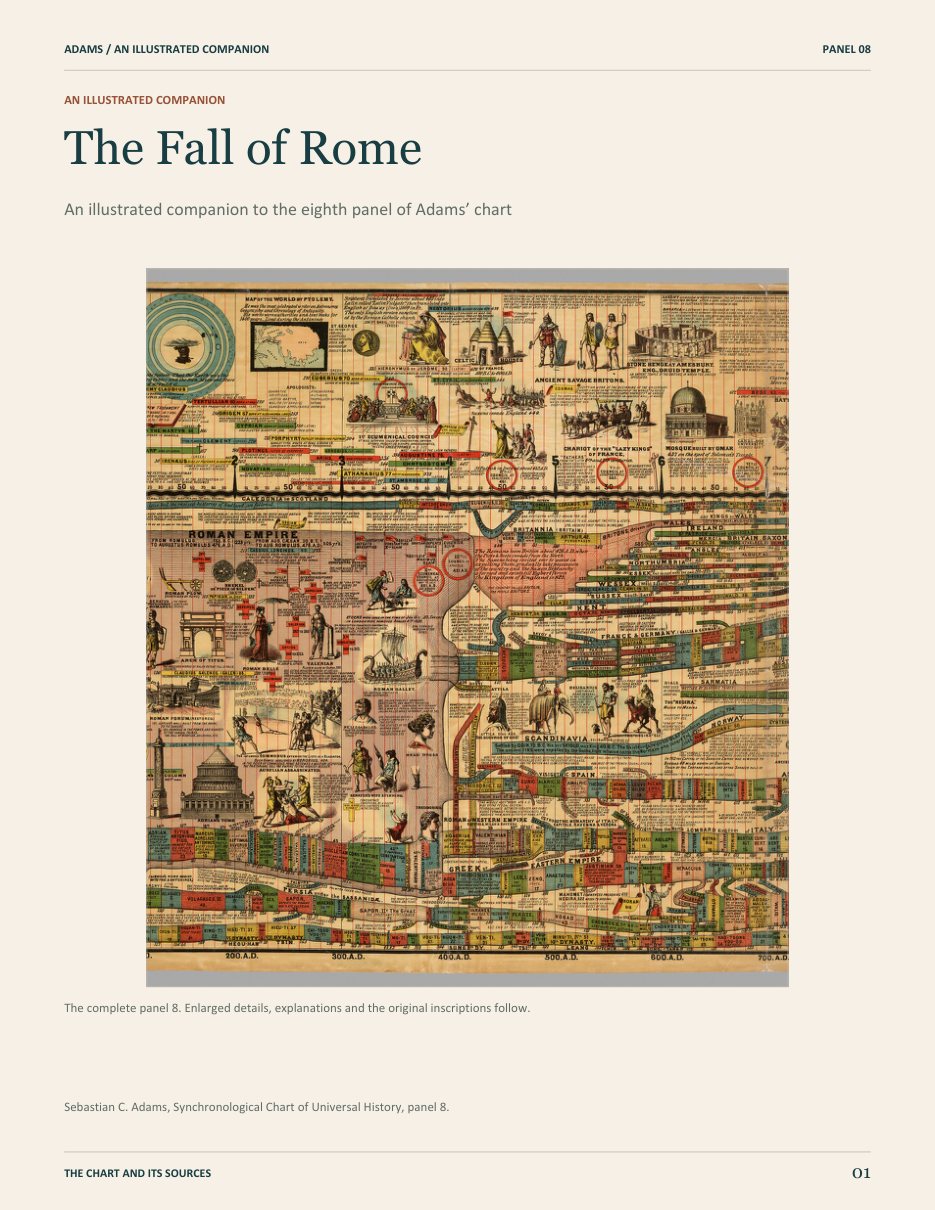 The Fall of Rome
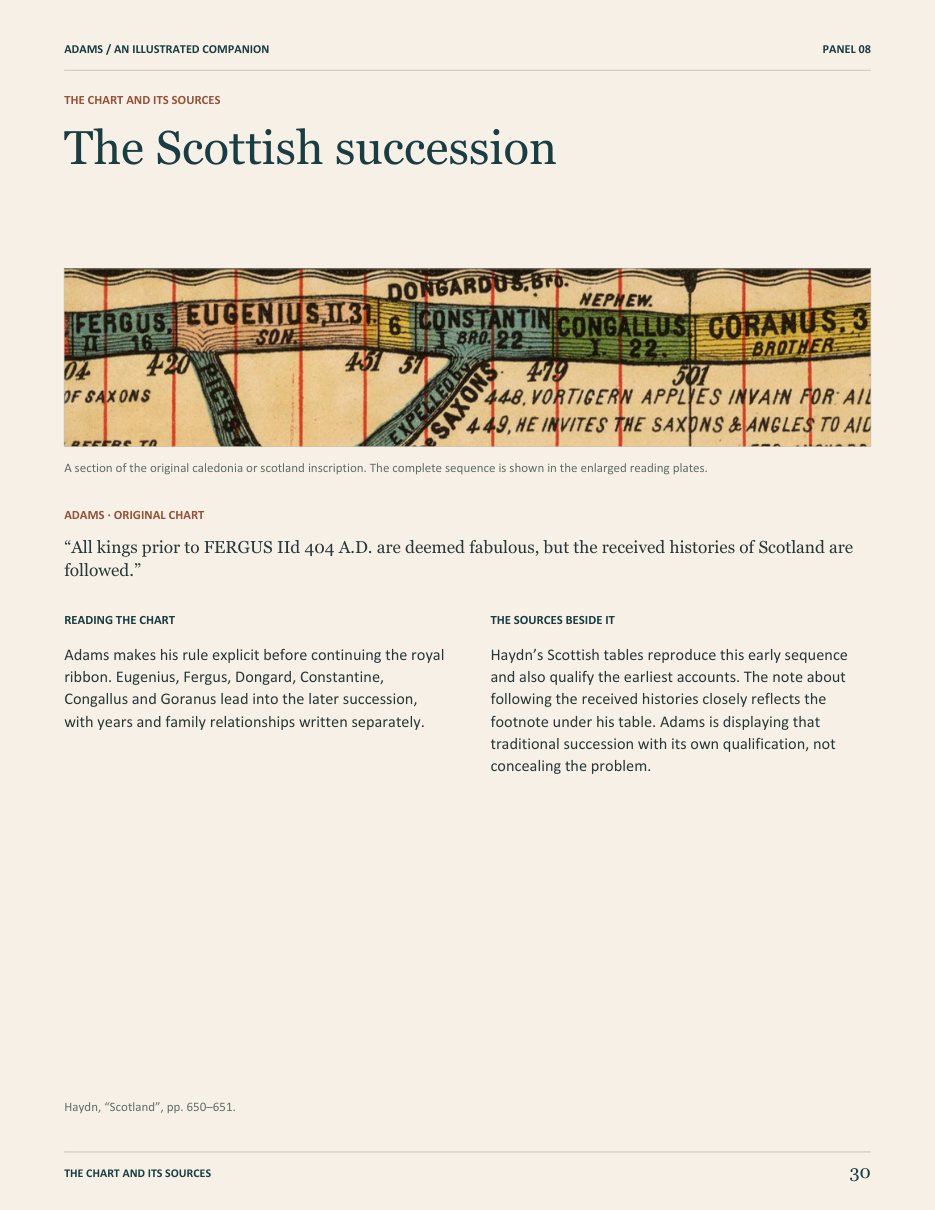 The Scottish succession
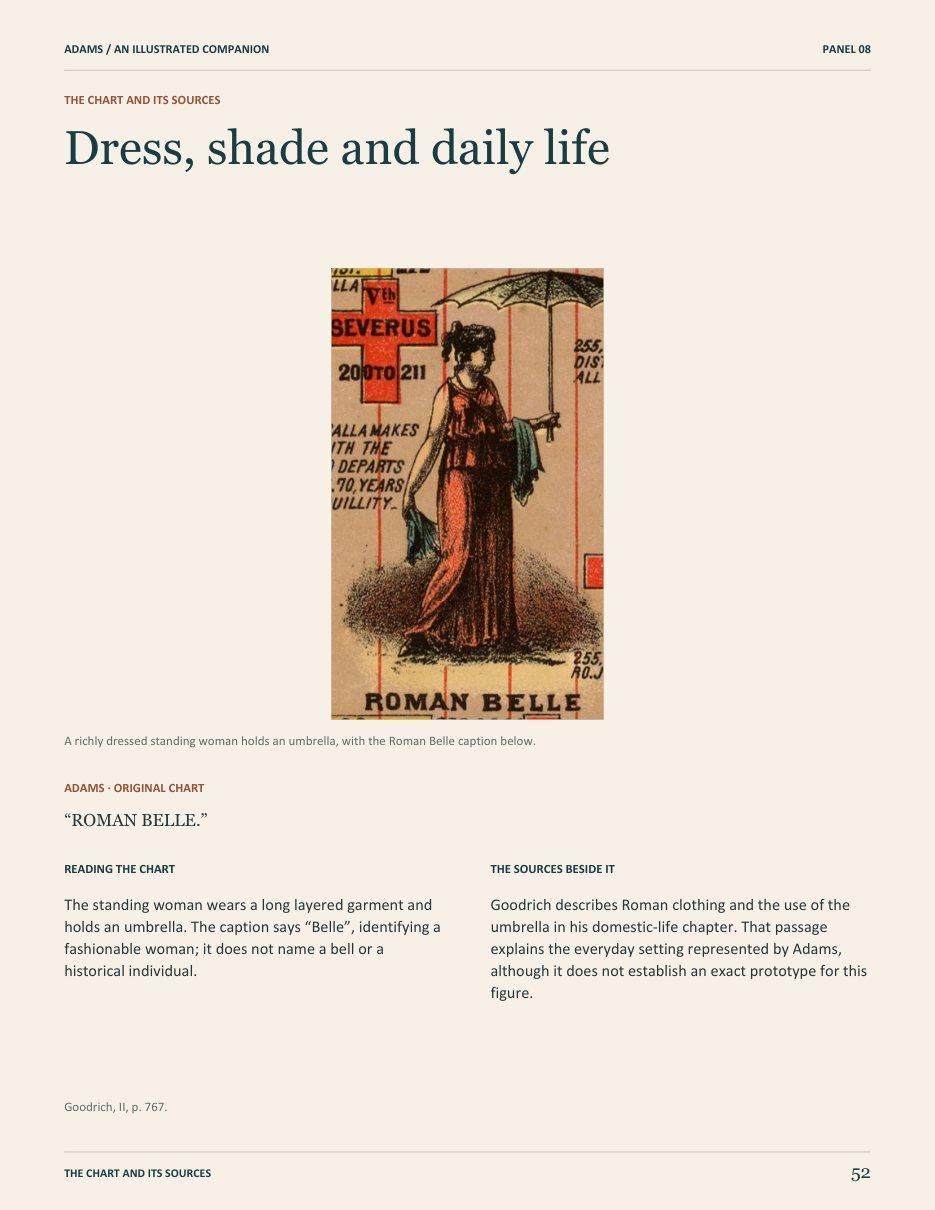 Dress, shade and daily life
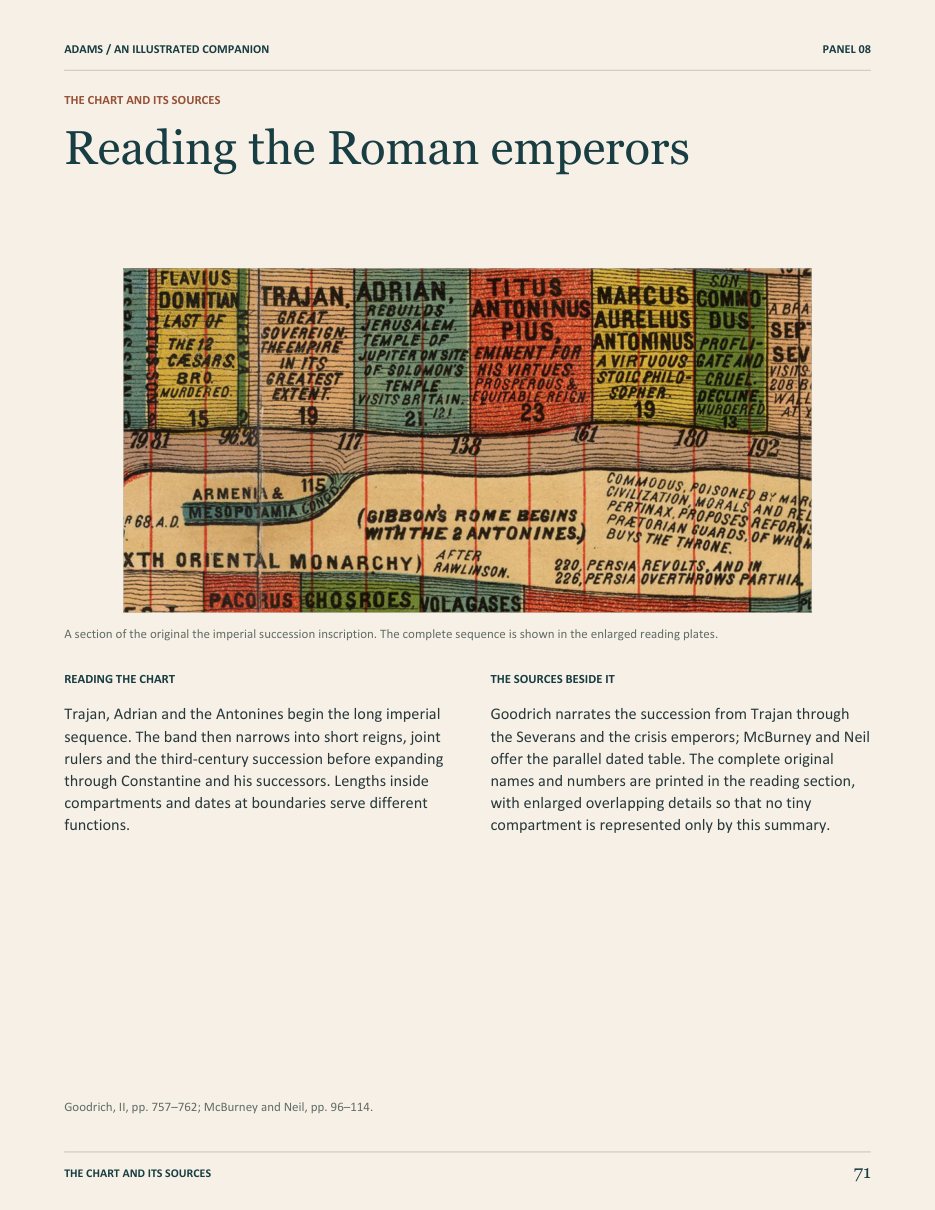 Reading the Roman emperors
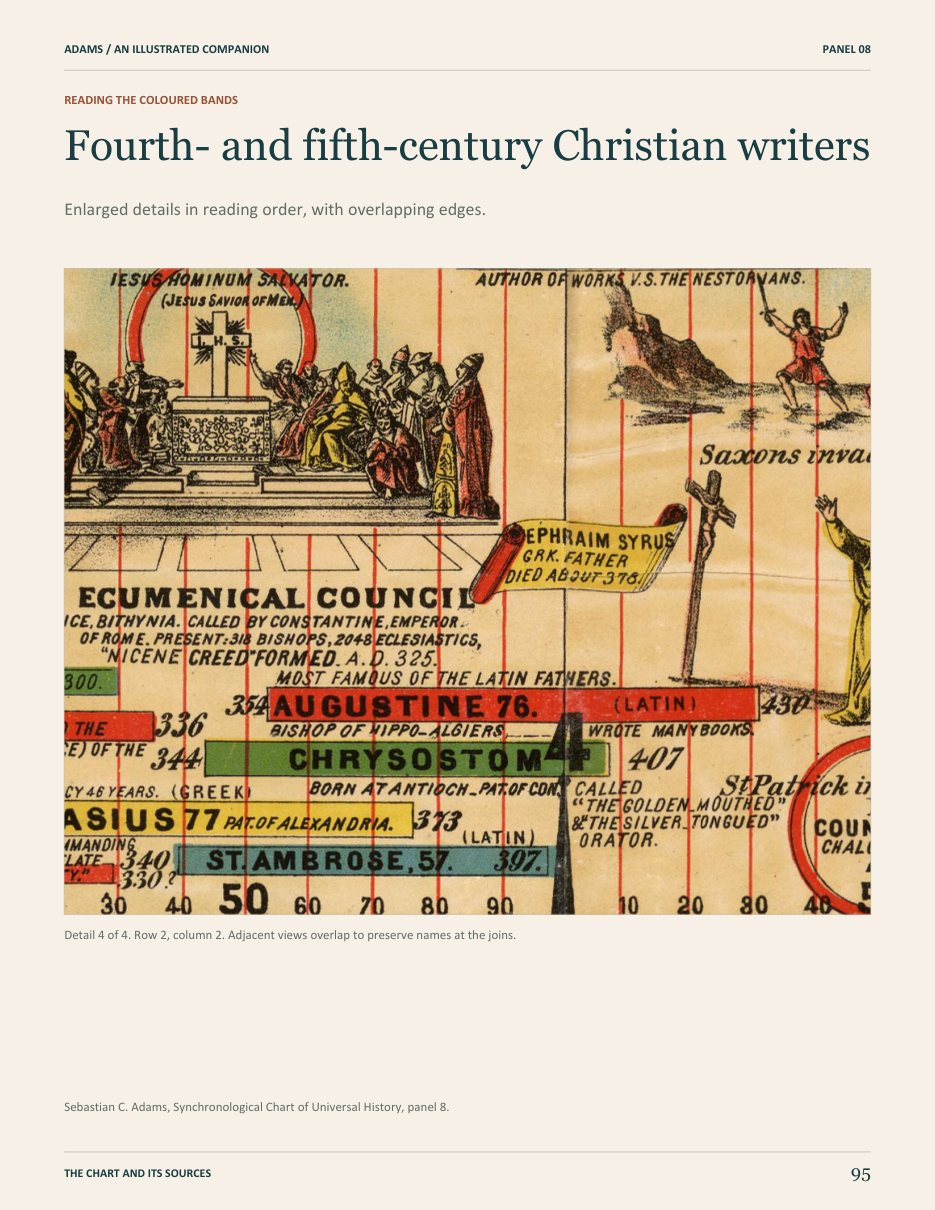 Fourth- and fifth-century Christian writers
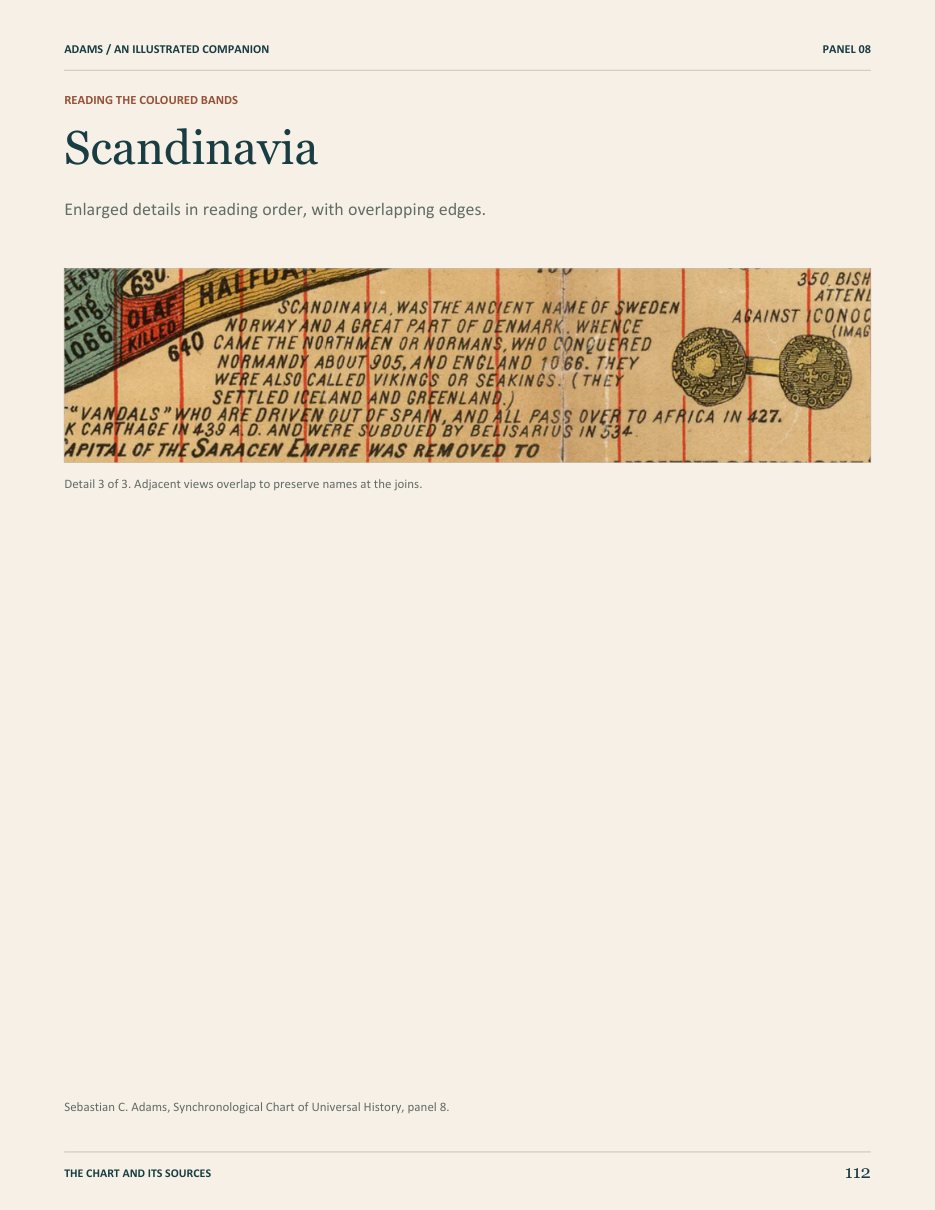 Scandinavia
What you'll find
- Adams' original wording, transcribed with his own spelling
- Enlarged details of the chart, each with its caption and explanation
- The books Adams relied on, identified and compared with his text
- The complete panel 8, ready to print at large size (9 sheets, US Letter or A4, about 55 x 61 cm once assembled)
Print and study
You may print the pages for your own study, your family or your classroom, as often as you need. Corrections and improvements to this edition are sent free to buyers. Please do not share or resell the file.
Use it beside the chart itself: Panel 8 on adamschart.org lets you zoom into every scene the book explains.
Contents
- The Fall of Romep. 7
- Reading the chartp. 8
- The earth at the centrep. 10
- Ptolemy’s inhabited worldp. 11
- Jerome and the Latin Biblep. 12
- Saint George and English patronagep. 13
- The New Testament and its witnessesp. 14
- Apologists, teachers and preserved booksp. 15
- Christian and Platonist writers togetherp. 16
- The Greek and Latin Fathersp. 17
- Names shared by different bishopsp. 18
- Augustine’s mission to Englandp. 19
- The council of Nicaeap. 20
- Councils on the chronological gridp. 21
- The fifth councilp. 22
- Bede and the sixth councilp. 23
- Celtic housesp. 24
- The people of ancient Britainp. 25
- The Saxon landingp. 26
- Patrick in Irelandp. 27
- Cosmas and Christian topographyp. 28
- The royal chariotp. 29
- Stonehenge restoredp. 30
- The domed shrine in Jerusalemp. 31
- Cambridge and its foundation traditionp. 32
- The route of arithmeticp. 33
- Paper and its materialsp. 34
- A bench and the word bankp. 35
- The Scottish successionp. 36
- Roman Britain and its noticesp. 37
- Britannia, Vortigern and Arthurp. 38
- Wales and Irelandp. 39
- Merciap. 40
- The East Anglesp. 41
- Northumbriap. 42
- Essexp. 43
- Wessexp. 44
- Sussexp. 45
- Kent and the Christian kingp. 46
- The Frankish streamp. 47
- Clovis’ divided inheritancep. 48
- Sarmatia, Poland and Russiap. 49
- Scandinavia and the Northmenp. 50
- Norway’s rising branchp. 51
- The span of Rome and Longinusp. 52
- The numbered persecutionsp. 53
- The Roman ploughp. 54
- A shekel and a modern valuationp. 55
- Papinian and imperial powerp. 56
- The Arch of Titusp. 57
- Dress, shade and daily lifep. 58
- Valerian and Saporp. 59
- The stocks: Scripture and later historyp. 60
- A Roman galleyp. 61
- The restored Roman Forump. 62
- Trajan’s columnp. 63
- Adrian’s tombp. 64
- Medicine, poetry and dialoguep. 65
- Commodus in the arenap. 66
- Aurelian assassinatedp. 67
- The portrait of Heliogabalusp. 68
- Spinning in a Roman householdp. 69
- A Roman coiffurep. 70
- Constantine and the sign of the crossp. 71
- Theodosius and the divided empirep. 72
- Attila and Chalonsp. 73
- The elephant and its ridersp. 74
- Belisarius and the beggar storyp. 75
- The Hegira and the start of an erap. 76
- Reading the Roman emperorsp. 77
- The Western Empirep. 78
- The Eastern Empirep. 79
- Visigothic Spainp. 80
- The Ostrogoths in Italyp. 81
- The Lombard kingdomp. 82
- Parthia as Rome’s counterpartp. 83
- Persia under the Sassanidaep. 84
- Armenia and Iberiap. 85
- Palmyra and Zenobiap. 86
- China along the lower edgep. 87
- Mahomet, the Koran and the caliphsp. 88
- Bells, a city fire and church dialsp. 89
- Era, language and a political endingp. 90
- Saxony and Bavaria across the borderp. 91
- The Roman standard bearerp. 92
- The Judaea Capta coinp. 93
- The named source for the papal successionp. 94
- Early Christian writers and apologistsp. 95
- Early Christian writers and apologistsp. 96
- Early Christian writers and apologistsp. 97
- Fourth- and fifth-century Christian writersp. 98
- Fourth- and fifth-century Christian writersp. 99
- Fourth- and fifth-century Christian writersp. 100
- Fourth- and fifth-century Christian writersp. 101
- Caledonia or Scotlandp. 102
- Caledonia or Scotlandp. 103
- Caledonia or Scotlandp. 104
- Britain under Romep. 105
- Britain under Romep. 106
- Wales and Irelandp. 107
- The East Anglesp. 108
- Northumbriap. 109
- Essexp. 110
- Wessexp. 111
- Sussexp. 112
- Kentp. 113
- The Merovingian kingdomsp. 114
- The Merovingian kingdomsp. 115
- Sarmatia, Poland and Russiap. 116
- Scandinaviap. 117
- Scandinaviap. 118
- Rome and Longinusp. 119
- The numbered persecutionsp. 120
- The numbered persecutionsp. 121
- The numbered persecutionsp. 122
- The numbered persecutionsp. 123
- The imperial successionp. 124
- The imperial successionp. 125
- The imperial successionp. 126
- The Eastern Empirep. 127
- Visigothic Spainp. 128
- Visigothic Spainp. 129
- The Lombard kingdomp. 130
- Persia under the Sassanidaep. 131
- Persia under the Sassanidaep. 132
- China’s dynastiesp. 133
- China’s dynastiesp. 134
- Mahomet, the Koran and the caliphsp. 135
- Mahomet, the Koran and the caliphsp. 136
- Mahomet, the Koran and the caliphsp. 137
- Era, language and the end of Gothic Italyp. 138
- Saxony and Bavariap. 139
- Original readings: Ptolemy’s cosmosp. 140
- Original readings: Early Christian writers and apologists — continuedp. 141
- Original readings: Fourth- and fifth-century Christian writers — continuedp. 142
- Original readings: The Britonsp. 143
- Original readings: The mosque and Jerusalemp. 144
- Original readings: Britain under Romep. 145
- Original readings: Wales and Irelandp. 146
- Original readings: Wessexp. 147
- Original readings: The Merovingian kingdomsp. 148
- Original readings: Scandinaviap. 149
- Original readings: The numbered persecutions — continuedp. 150
- Original readings: The Arch of Titusp. 151
- Original readings: Adrian’s tombp. 152
- Original readings: Roman hair dressp. 153
- Original readings: The elephant and its ridersp. 154
- Original readings: The imperial succession — continuedp. 155
- Original readings: The Eastern Empirep. 156
- Original readings: The Ostrogoths in Italyp. 157
- Original readings: Persia under the Sassanidaep. 158
- Original readings: China’s dynasties — continuedp. 159
- Original readings: Bede and the sixth councilp. 160
- Books and editionsp. 161
- Books and editionsp. 162
- Books and editionsp. 163
- Books and editionsp. 164
- Further referencesp. 165
Questions
How do I receive the book?
Right after payment, your download link appears on screen and is sent to your email address.
Is this the printed chart?
No. This is a PDF book that explains the chart. The complete chart itself is free to explore on adamschart.org.
Which devices can open it?
Any computer, tablet or phone with a PDF reader. Pages are US Letter size and print well on A4 with "fit to page".
A question or a correction?
Write to [email protected].