
Heritage Timelines · Study Edition · Panel 7
Greece and Rome
The Beginning of the Christian Era · c. 500 BC–AD 100
A study of Panel 7 of Adams' chart: Greece, Rome and the Beginning of the Christian Era
- 228 pages
- 162 illustrations
- 216 sections
- PDF · 30.5 MB
- + panel 7 to print
This book walks through panel 7 of Adams' chart, c. 500 BC–AD 100, detail by detail: Greece and Rome; Reading across the centuries; The books after the return; The languages within Ezra; Esther before the king; Nehemiah and the restored city; Malachi at the close of the Old Testament; Jerusalem and Samaria. Each page sets Adams' own words and pictures beside the sources behind them.
Digital PDF. Read it on any screen, zoom into every detail, print the pages you need. Also included: the complete panel 7 to print and assemble (9 sheets, US Letter or A4, about 55 x 62 cm once assembled). No printed book or chart is shipped.
Look inside
Real pages from the book. Tap a page to enlarge it.
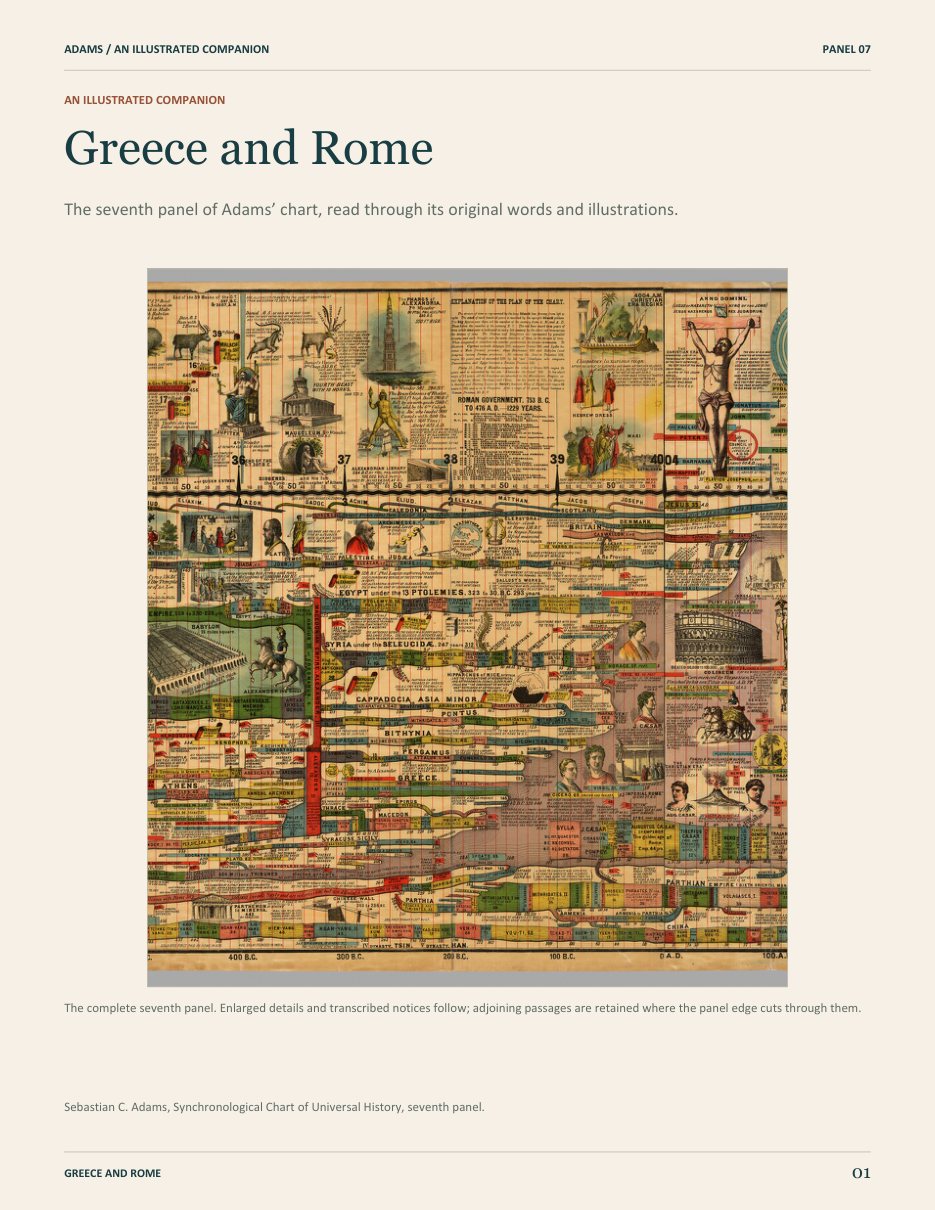 Greece and Rome
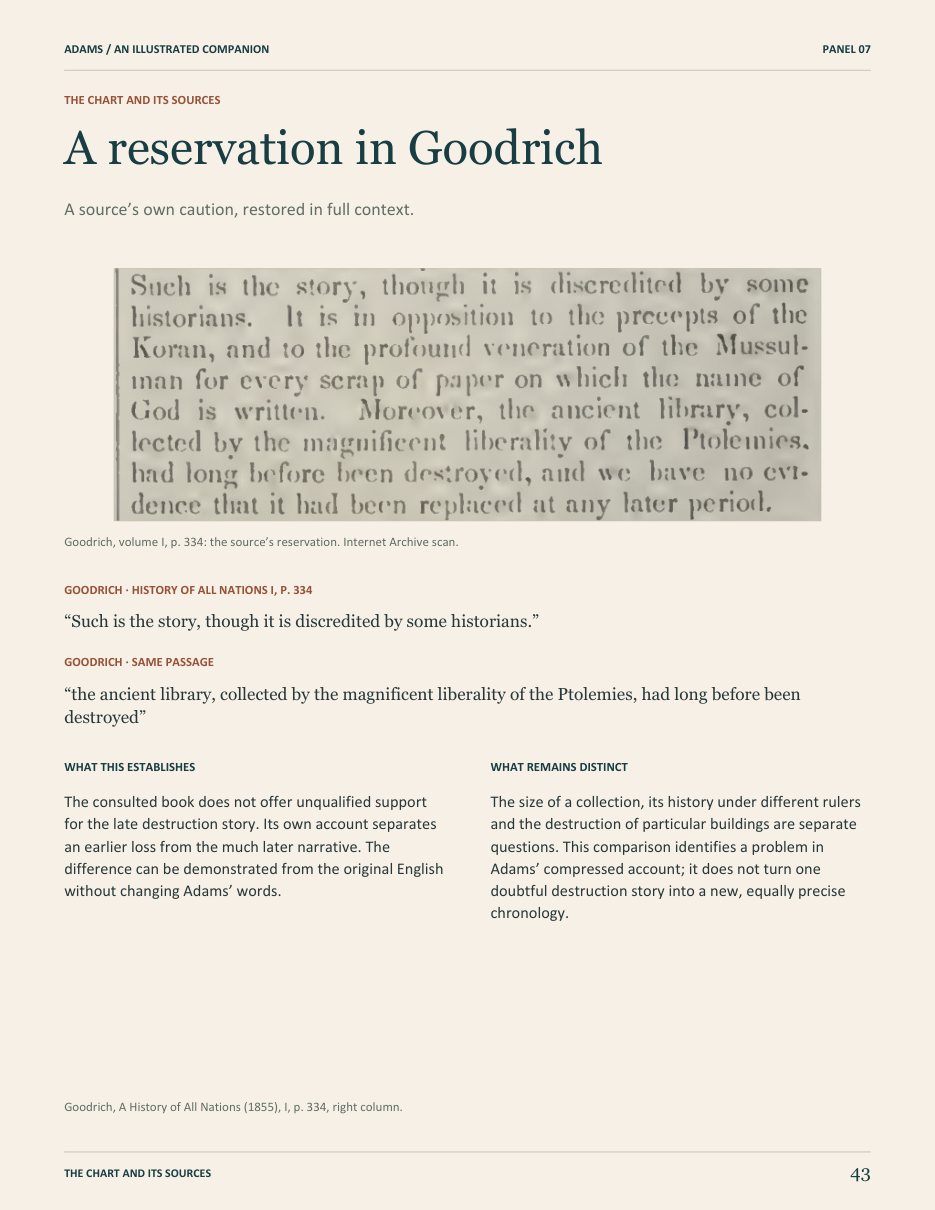 A reservation in Goodrich
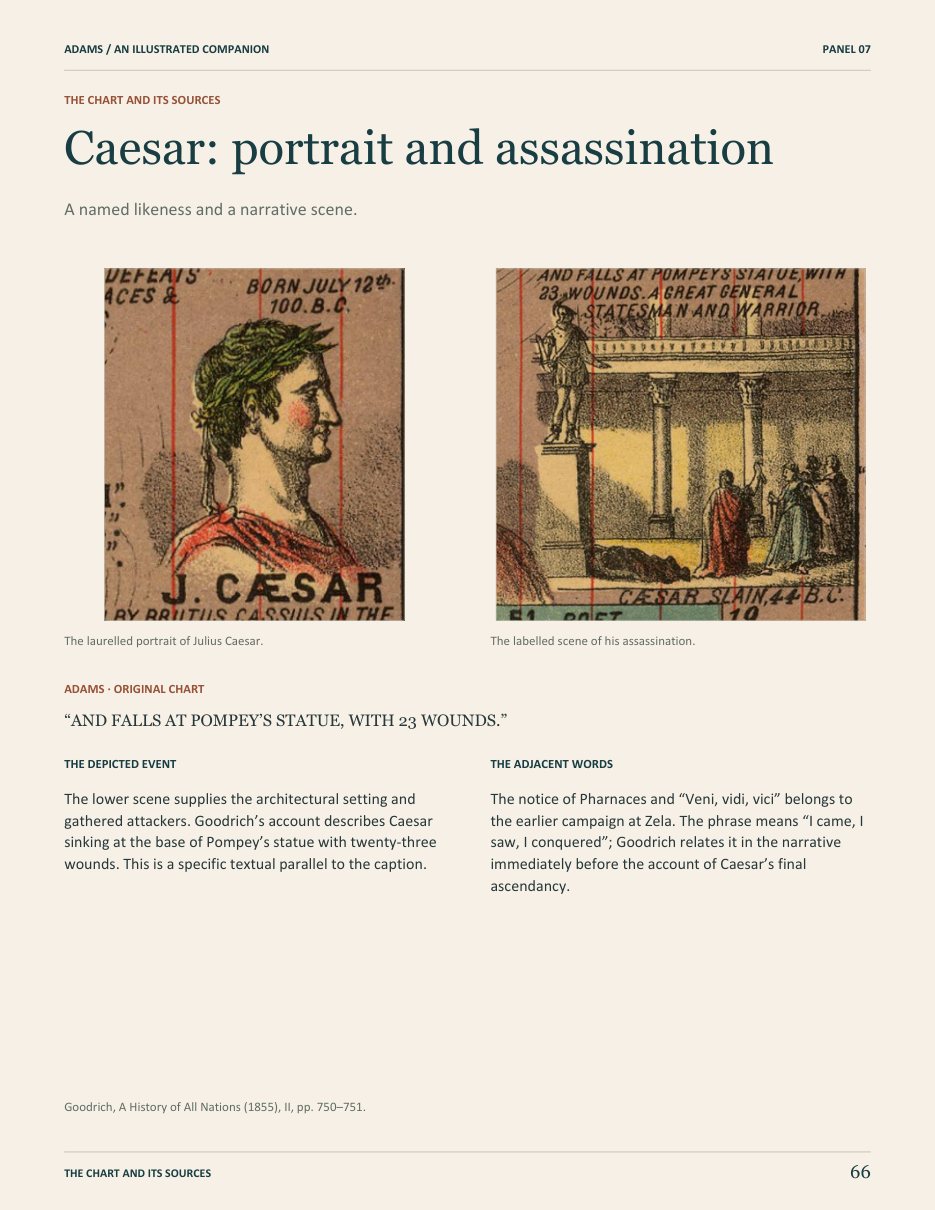 Caesar: portrait and assassination
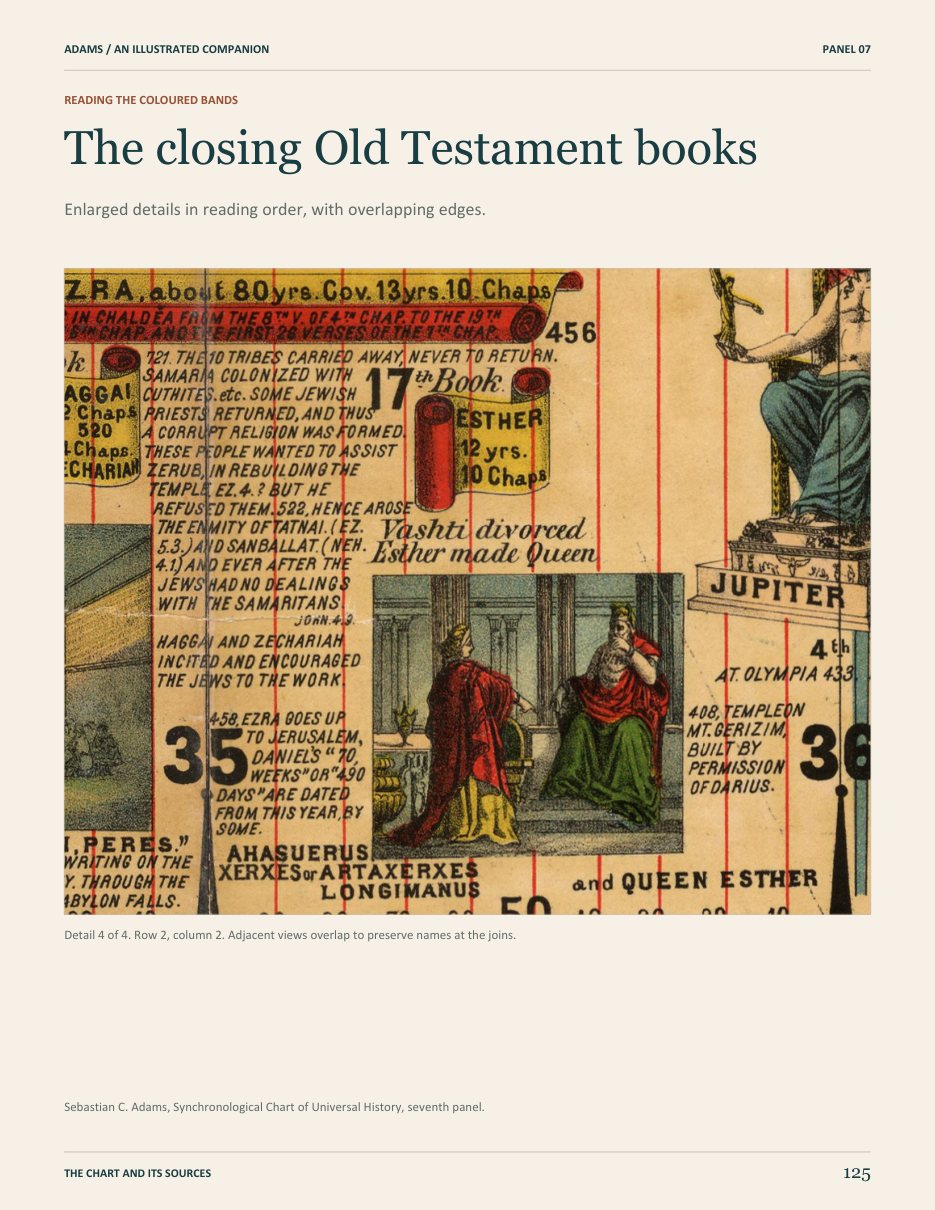 The closing Old Testament books
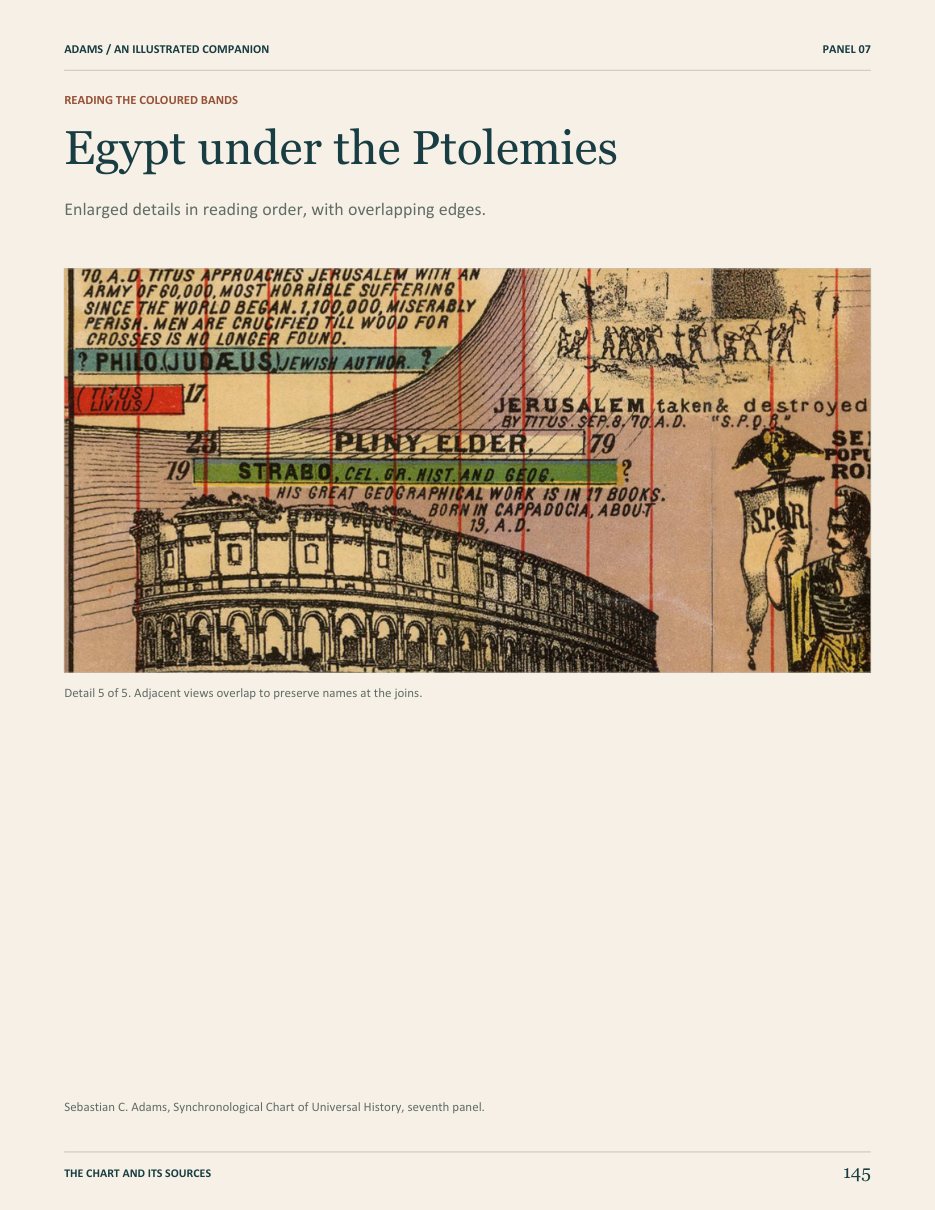 Egypt under the Ptolemies
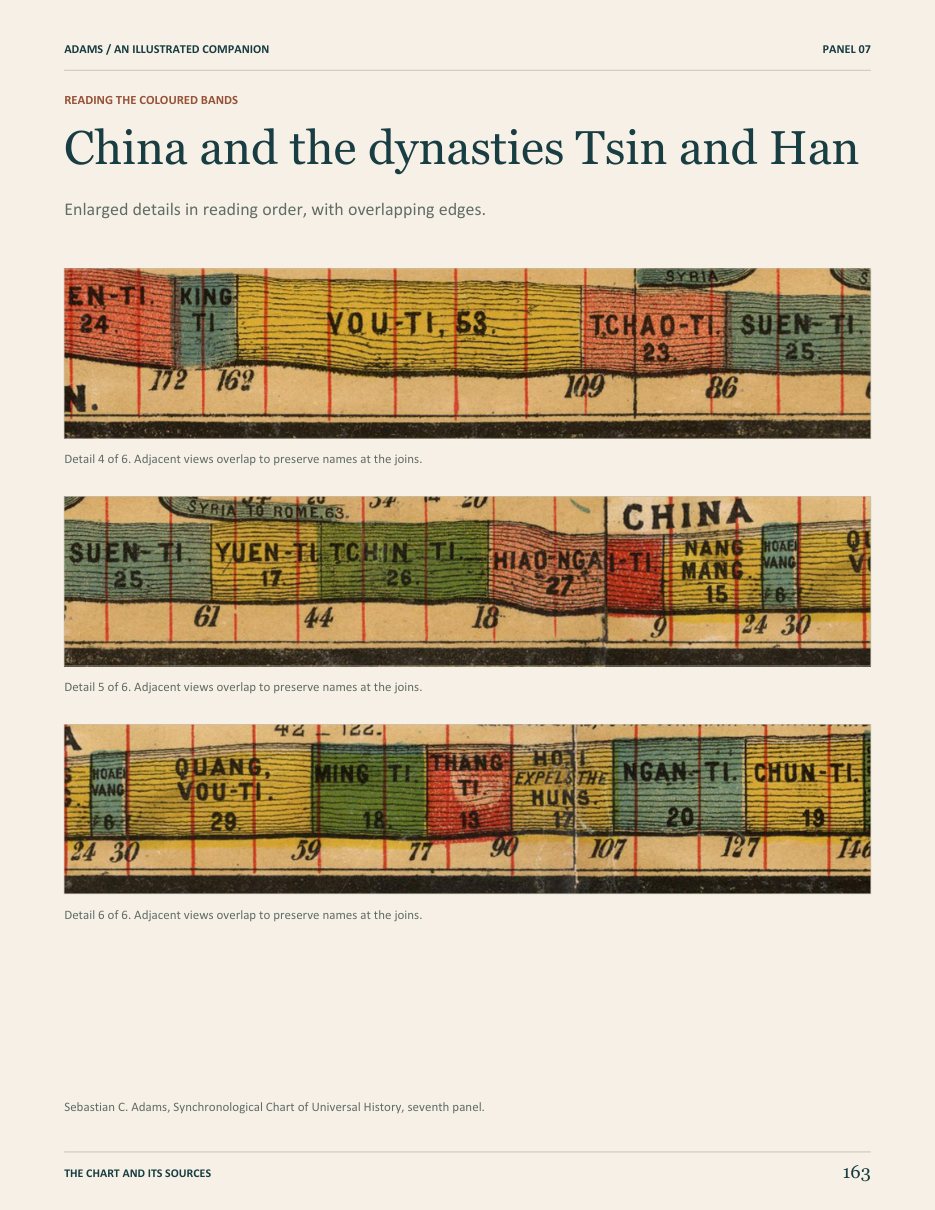 China and the dynasties Tsin and Han
What you'll find
- Adams' original wording, transcribed with his own spelling
- King James quotations checked word for word (16 in this book)
- Enlarged details of the chart, each with its caption and explanation
- The books Adams relied on, identified and compared with his text
- The complete panel 7, ready to print at large size (9 sheets, US Letter or A4, about 55 x 62 cm once assembled)
Print and study
You may print the pages for your own study, your family or your classroom, as often as you need. Corrections and improvements to this edition are sent free to buyers. Please do not share or resell the file.
Use it beside the chart itself: Panel 7 on adamschart.org lets you zoom into every scene the book explains.
Contents
- Greece and Romep. 8
- Reading across the centuriesp. 9
- The books after the returnp. 11
- The languages within Ezrap. 12
- Esther before the kingp. 13
- Nehemiah and the restored cityp. 14
- Malachi at the close of the Old Testamentp. 15
- Jerusalem and Samariap. 16
- The bear and the ramp. 17
- The he-goat from the westp. 18
- The divided hornsp. 19
- Seventy weeks and the returnp. 20
- The high-priestly ribbonp. 21
- The Maccabees and the sanctuaryp. 22
- Short notices, fuller sourcesp. 23
- Priests, rulers and the royal titlep. 24
- Herod and Roman authorityp. 25
- The family ribbon reaches Jesusp. 26
- Hebrew dressp. 27
- The Magi and the starp. 28
- Bethlehem in the Gospel accountp. 29
- The crucifixionp. 30
- The title above the crossp. 31
- The Christian erap. 32
- Adams beside Haydnp. 33
- John the Baptistp. 34
- Peter, Paul and Barnabasp. 35
- The council at Jerusalemp. 36
- John and the New Testamentp. 37
- Two Jewish historical witnessesp. 38
- Jerusalem under siegep. 39
- The figures in the siege noticep. 40
- The early church across the boundaryp. 41
- Judaea on a Roman coinp. 42
- The Nativity commemoratedp. 43
- The image of Jupiterp. 44
- The Mausoleump. 45
- The Pharos of Alexandriap. 46
- The Colossus over the harbourp. 47
- What the Colossus sources sayp. 48
- Alexandria and its libraryp. 49
- A reservation in Goodrichp. 50
- Diogenes and the tubp. 51
- The plan of the chartp. 52
- How Adams asks us to readp. 53
- Roman governmentp. 54
- A Roman constitutional outlinep. 55
- Cincinnatus and the public officesp. 56
- Socrates and the hemlockp. 57
- Plato and Demosthenesp. 58
- Archimedes: screw and leverp. 59
- Water and the measurement of timep. 60
- Euclid and the Alexandrian schoolsp. 61
- Manetho and Berosusp. 62
- Eratosthenes and the earthp. 63
- Hipparchus and the mapp. 64
- Polybius and Posidoniusp. 65
- The Rosetta Stone revisitedp. 66
- Babylon at the panel boundaryp. 67
- The Parthenon at Athensp. 68
- The historians’ successive accountsp. 69
- Schools of Greek philosophyp. 70
- Poetry, sculpture and medicinep. 71
- A Buddhist notice beside Greecep. 72
- Caesar: portrait and assassinationp. 73
- From civil war to Augustusp. 74
- Cicero and Virgilp. 75
- Horace, Ovid and Lucretiusp. 76
- Sallust and the works of historyp. 77
- Strabo: a date that needs correctionp. 78
- Varro, Livy, Diodorus and Plinyp. 79
- The Colosseump. 80
- Nero and the short imperial reignsp. 81
- Seneca, Lucan and Celsusp. 82
- Plutarch and the chariotp. 83
- Tacitus and the surviving writingsp. 84
- Vesuvius and the buried citiesp. 85
- The census figures in the marginp. 86
- A coin attributed to Alexanderp. 87
- The final Persian kingsp. 88
- Xerxes at the Hellespontp. 89
- Cunaxa and the return of the Greeksp. 90
- Egypt’s interval of independencep. 91
- Philip and the Macedonian successionp. 92
- Alexander the Great on horsebackp. 93
- The campaigns across three kingdomsp. 94
- The kingdoms after Alexanderp. 95
- The early Ptolemiesp. 96
- Joint rule and the final Ptolemiesp. 97
- Cleopatra’s royal bargep. 98
- Actium and the end of the dynastyp. 99
- Seleucus and the Syrian kingdomp. 100
- Wars and secessions beside Syriap. 101
- The later Seleucid claimantsp. 102
- Cappadocia and the Ariarathes linep. 103
- Pontus: Mithridates and Pharnacesp. 104
- The Mithridatic wars in three noticesp. 105
- Bithynia between older empires and Romep. 106
- Pergamus and the Attalid kingsp. 107
- Sparta after the Persian warsp. 108
- Athens and the Peloponnesian warp. 109
- The Greek leagues and Roman settlementp. 110
- Thrace and Lysimachusp. 111
- Epirus and Pyrrhusp. 112
- Macedonia from the successors to Perseusp. 113
- Syracuse and Sicilyp. 114
- Carthage, Sicily and the first Roman warp. 115
- Hamilcar, Hasdrubal and Hannibalp. 116
- The destruction of Carthagep. 117
- Arsaces and the Parthian beginningp. 118
- Parthia and the confrontation with Romep. 119
- The Parthian kings across the Christian erap. 120
- Parthia as Rome’s counterweightp. 121
- Armenia between larger kingdomsp. 122
- China from the later kings to Tsin and Hanp. 123
- China across the new erap. 124
- The Great Wall and its measurementsp. 125
- Caledonia, Fergus and the Scottish traditionp. 126
- Denmark and the chronicle’s eighteen kingsp. 127
- Britain and the Roman encountersp. 128
- The closing Old Testament booksp. 129
- The closing Old Testament booksp. 130
- The closing Old Testament booksp. 131
- The closing Old Testament booksp. 132
- Apostles and the early Christian recordp. 133
- Apostles and the early Christian recordp. 134
- The ancestry from Abiud to Jesusp. 135
- The ancestry from Abiud to Jesusp. 136
- The ancestry from Abiud to Jesusp. 137
- High priests and governors of Judaeap. 138
- Judaea, the Maccabees and Herodp. 139
- Judaea, the Maccabees and Herodp. 140
- Judaea, the Maccabees and Herodp. 141
- Judaea, the Maccabees and Herodp. 142
- Judaea, the Maccabees and Herodp. 143
- Britain, Gaul and Denmarkp. 144
- Britain, Gaul and Denmarkp. 145
- Caledonia and Scotlandp. 146
- Caledonia and Scotlandp. 147
- Egypt under the Ptolemiesp. 148
- Egypt under the Ptolemiesp. 149
- Egypt under the Ptolemiesp. 150
- Egypt under the Ptolemiesp. 151
- Egypt under the Ptolemiesp. 152
- Syria under the Seleucidaep. 153
- Syria under the Seleucidaep. 154
- The later Persian kingsp. 155
- Cappadocia in Asia Minorp. 156
- Cappadocia in Asia Minorp. 157
- Pontus and Bithyniap. 158
- Pergamusp. 159
- Greece and Achaiap. 160
- Macedonian successionp. 161
- Macedonian successionp. 162
- Syracuse and Sicilyp. 163
- Carthage and the Punic warsp. 164
- Carthage and the Punic warsp. 165
- Parthia and the Parthian empirep. 166
- Parthia and the Parthian empirep. 167
- Armenia and Parthian Armeniap. 168
- China and the dynasties Tsin and Hanp. 169
- China and the dynasties Tsin and Hanp. 170
- Rome from republic to empirep. 171
- Rome from republic to empirep. 172
- Rome from republic to empirep. 173
- Roman wars and political noticesp. 174
- Roman wars and political noticesp. 175
- Roman wars and political noticesp. 176
- Philosophers and the Buddha noticep. 177
- Philosophers and the Buddha noticep. 178
- Philosophers and the Buddha noticep. 179
- The lower century labelsp. 180
- The lower century labelsp. 181
- Roman historians and geographical writersp. 182
- Roman historians and geographical writersp. 183
- Roman historians and geographical writersp. 184
- Pindar, Aristotle and neighbouring literary ribbonsp. 185
- Pindar, Aristotle and neighbouring literary ribbonsp. 186
- Pindar, Aristotle and neighbouring literary ribbonsp. 187
- Earlier Roman republican noticesp. 188
- Earlier Roman republican noticesp. 189
- The Scottish-history qualificationp. 190
- The early Republic: boundary readingp. 191
- Original readings: The closing Old Testament booksp. 192
- Original readings: Daniel’s bear and the ramp. 193
- Original readings: Jupiter at Olympusp. 194
- Original readings: The Colossus of Rhodes — continuedp. 195
- Original readings: Roman government in outlinep. 196
- Original readings: Cleopatra’s luxurious reignp. 197
- Original readings: The crucifixion and the Christian era — continuedp. 198
- Original readings: The ancestry from Abiud to Jesus — continuedp. 199
- Original readings: Judaea, the Maccabees and Herodp. 200
- Original readings: Judaea, the Maccabees and Herod — continuedp. 201
- Original readings: Britain, Gaul and Denmarkp. 202
- Original readings: Egypt under the Ptolemiesp. 203
- Original readings: Egypt under the Ptolemies — continuedp. 204
- Original readings: Syria under the Seleucidae — continuedp. 205
- Original readings: The later Persian kings — continuedp. 206
- Original readings: Pontus and Bithynia — continuedp. 207
- Original readings: Greece and Achaiap. 208
- Original readings: Sparta and Athens — continuedp. 209
- Original readings: Macedonian succession — continuedp. 210
- Original readings: Syracuse and Sicily — continuedp. 211
- Original readings: Parthia and the Parthian empire — continuedp. 212
- Original readings: Armenia and Parthian Armeniap. 213
- Original readings: China and the dynasties Tsin and Han — continuedp. 214
- Original readings: Posidonius of Rhodesp. 215
- Original readings: Rome from republic to empire — continuedp. 216
- Original readings: Rome from republic to empire — continuedp. 217
- Original readings: Virgil and Cicerop. 218
- Original readings: Seneca and the early imperial writers — continuedp. 219
- Original readings: Philosophers and the Buddha noticep. 220
- Original readings: Manethop. 221
- Original readings: Roman historians and geographical writers — continuedp. 222
- Original readings: Pindar, Aristotle and neighbouring literary ribbonsp. 223
- Original readings: Vesuvius, Pompeii and Herculaneump. 224
- Books and editionsp. 225
- Books and editionsp. 226
- Books and editionsp. 227
- Books and editionsp. 228
Questions
How do I receive the book?
Right after payment, your download link appears on screen and is sent to your email address.
Is this the printed chart?
No. This is a PDF book that explains the chart. The complete chart itself is free to explore on adamschart.org.
Which devices can open it?
Any computer, tablet or phone with a PDF reader. Pages are US Letter size and print well on A4 with "fit to page".
A question or a correction?
Write to [email protected].