
Heritage Timelines · Study Edition · Panel 6
Kings, Prophets and Empires
From Saul to Cyrus · c. 1100–500 BC
A study of Panel 6 of Adams' chart: From Saul to Cyrus: Kings, Prophets and Empires
- 147 pages
- 96 illustrations
- 138 sections
- PDF · 18.2 MB
- + panel 6 to print
This book walks through panel 6 of Adams' chart, c. 1100–500 BC, detail by detail: Kings, Prophets and Empires; Reading across the centuries; David faces Goliath; David and the Psalms; Forty years as king; War, rebellion and the altar; Solomon and the books of wisdom; Solomon’s temple. Each page sets Adams' own words and pictures beside the sources behind them.
Digital PDF. Read it on any screen, zoom into every detail, print the pages you need. Also included: the complete panel 6 to print and assemble (9 sheets, US Letter or A4, about 55 x 62 cm once assembled). No printed book or chart is shipped.
Look inside
Real pages from the book. Tap a page to enlarge it.
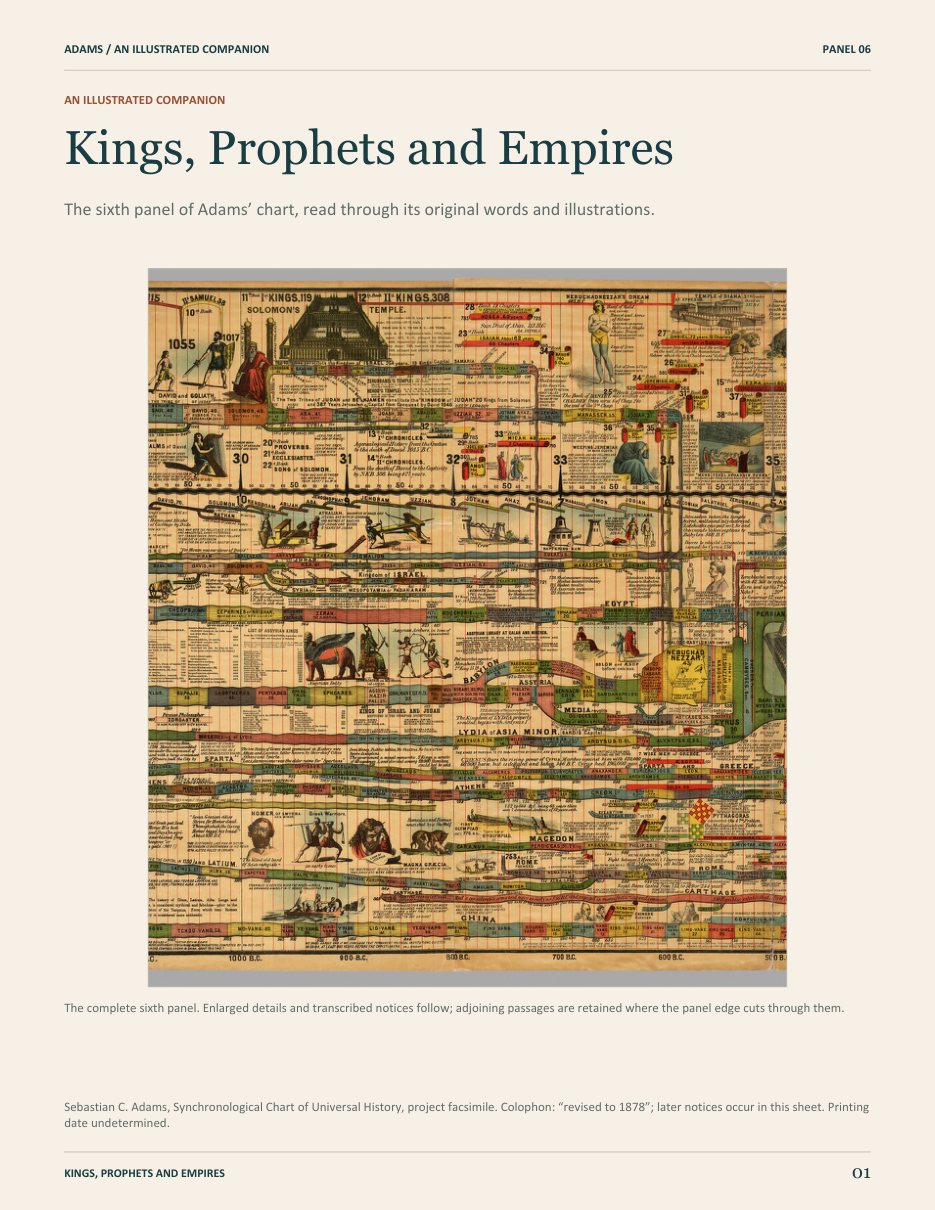 Kings, Prophets and Empires
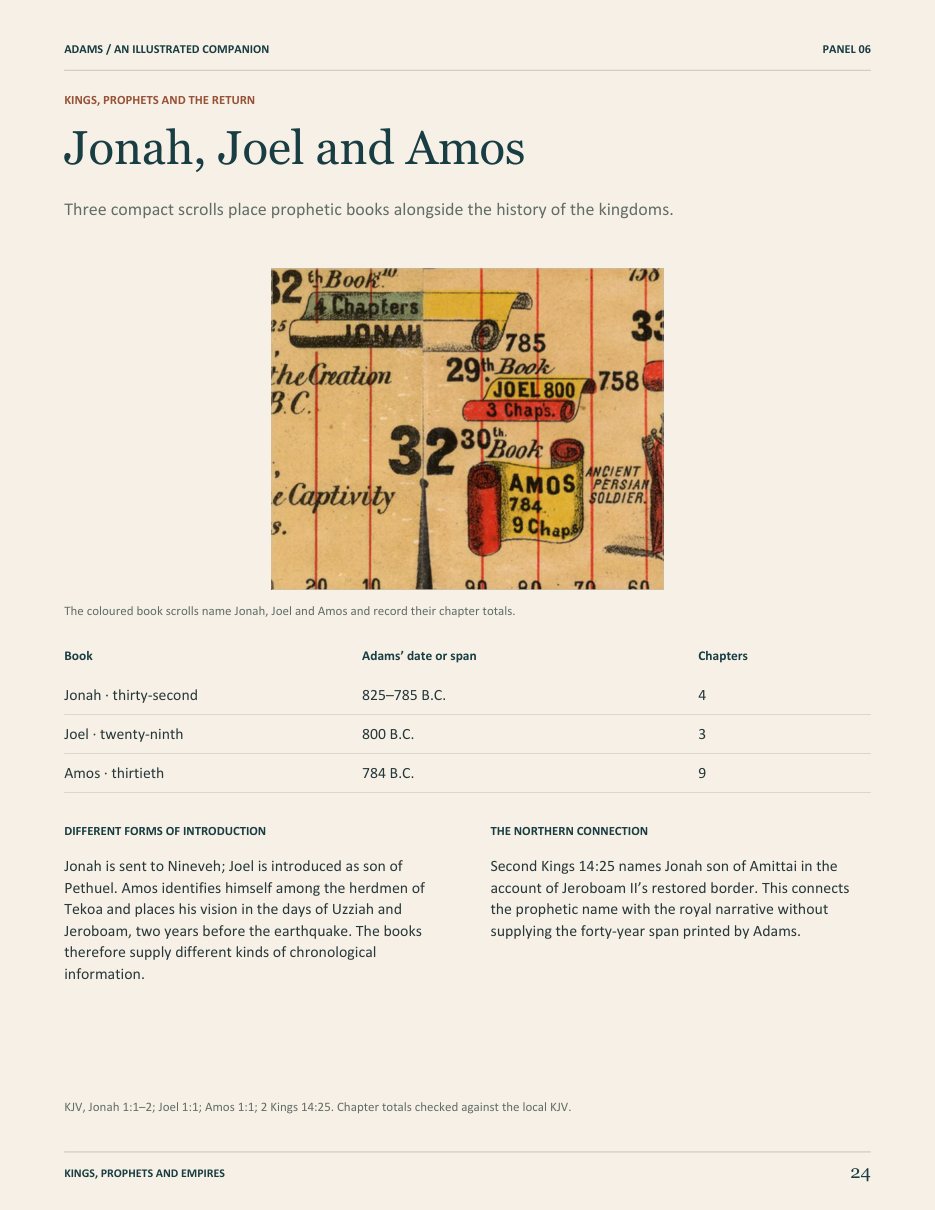 Jonah, Joel and Amos
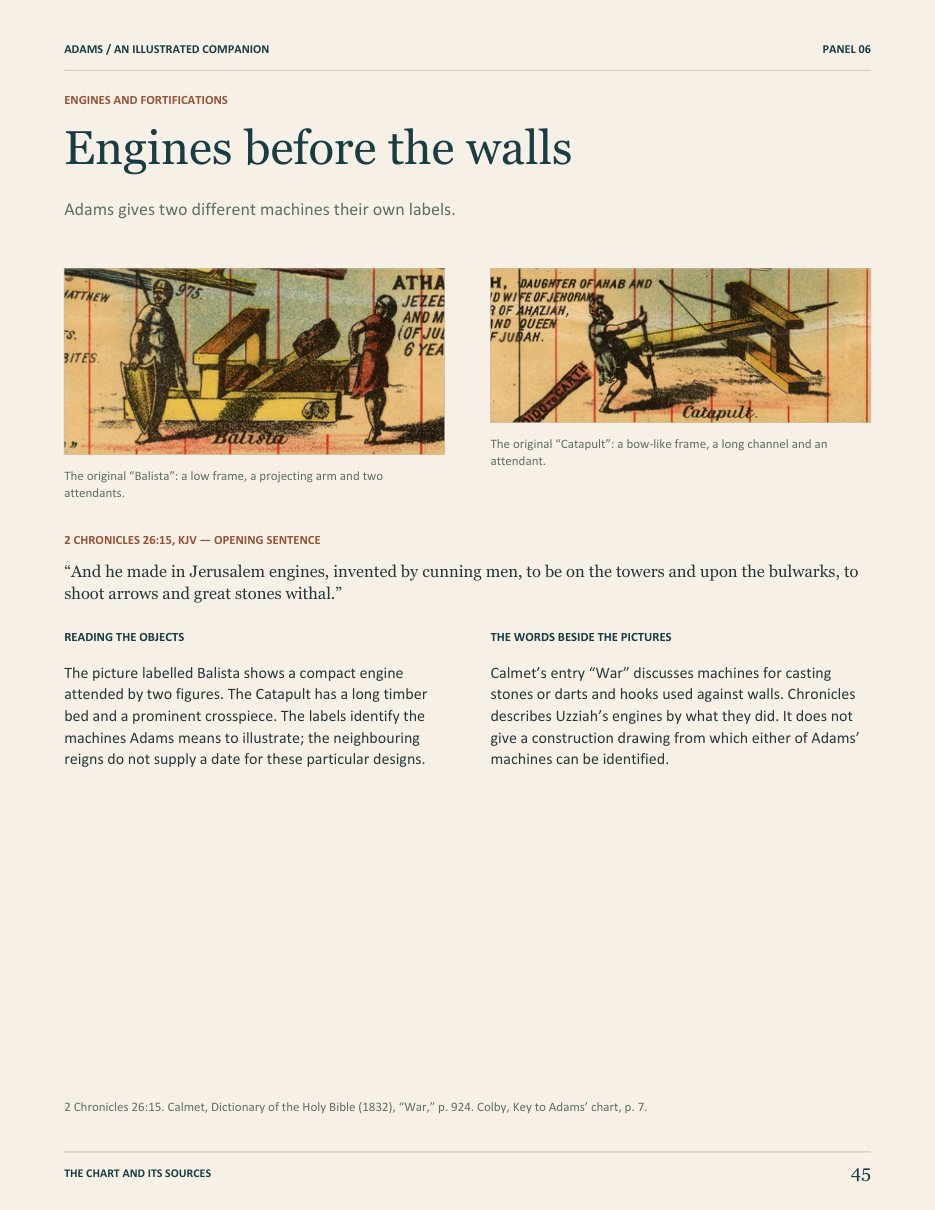 Engines before the walls
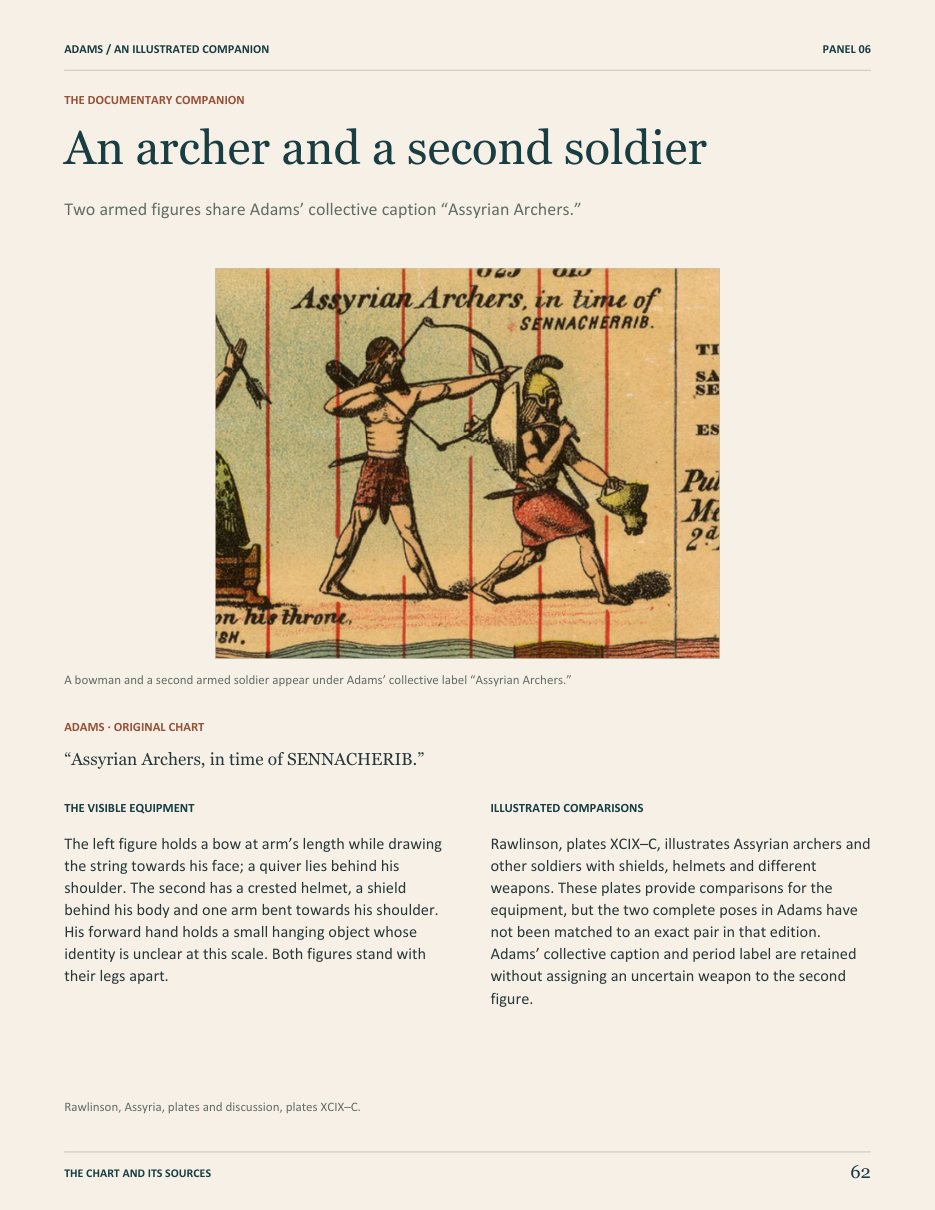 An archer and a second soldier
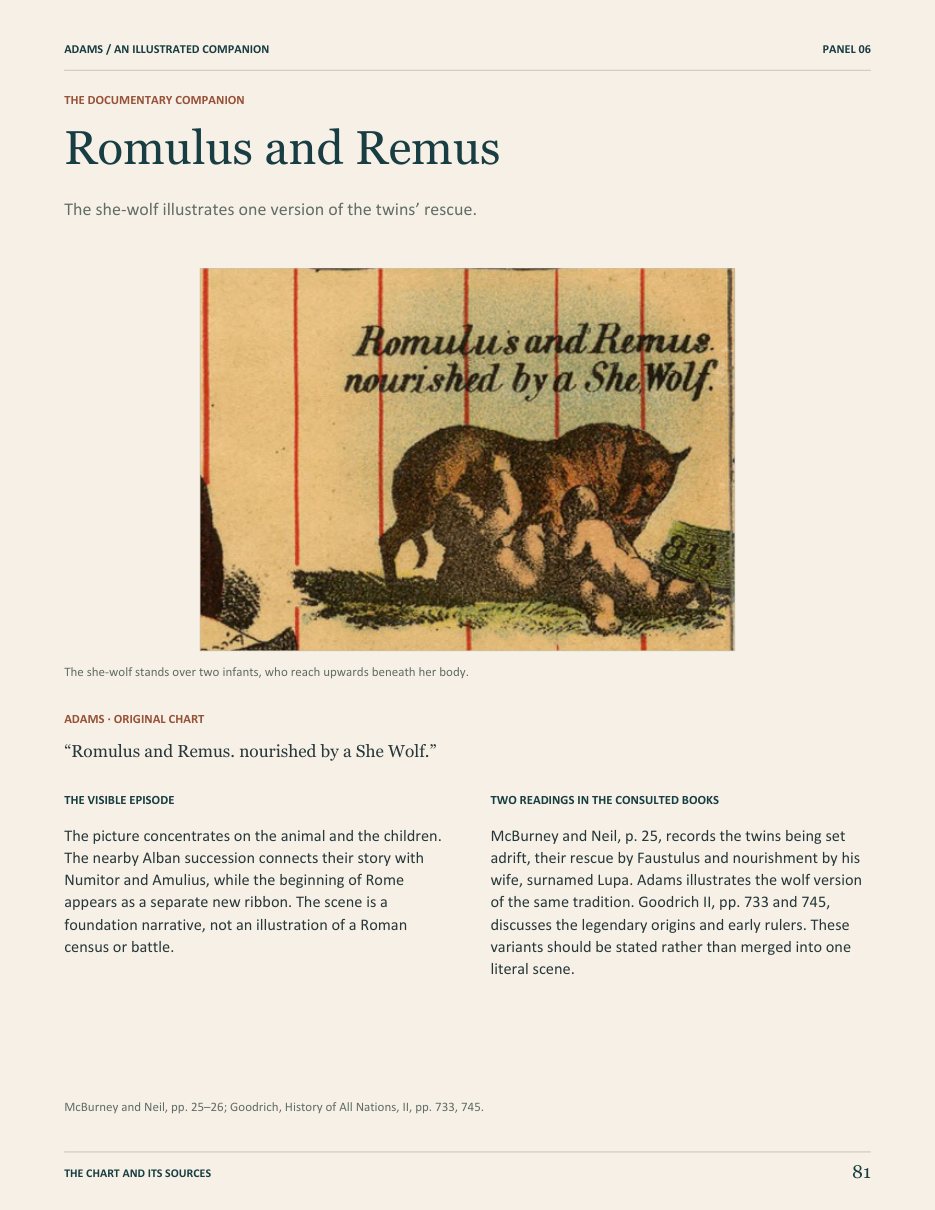 Romulus and Remus
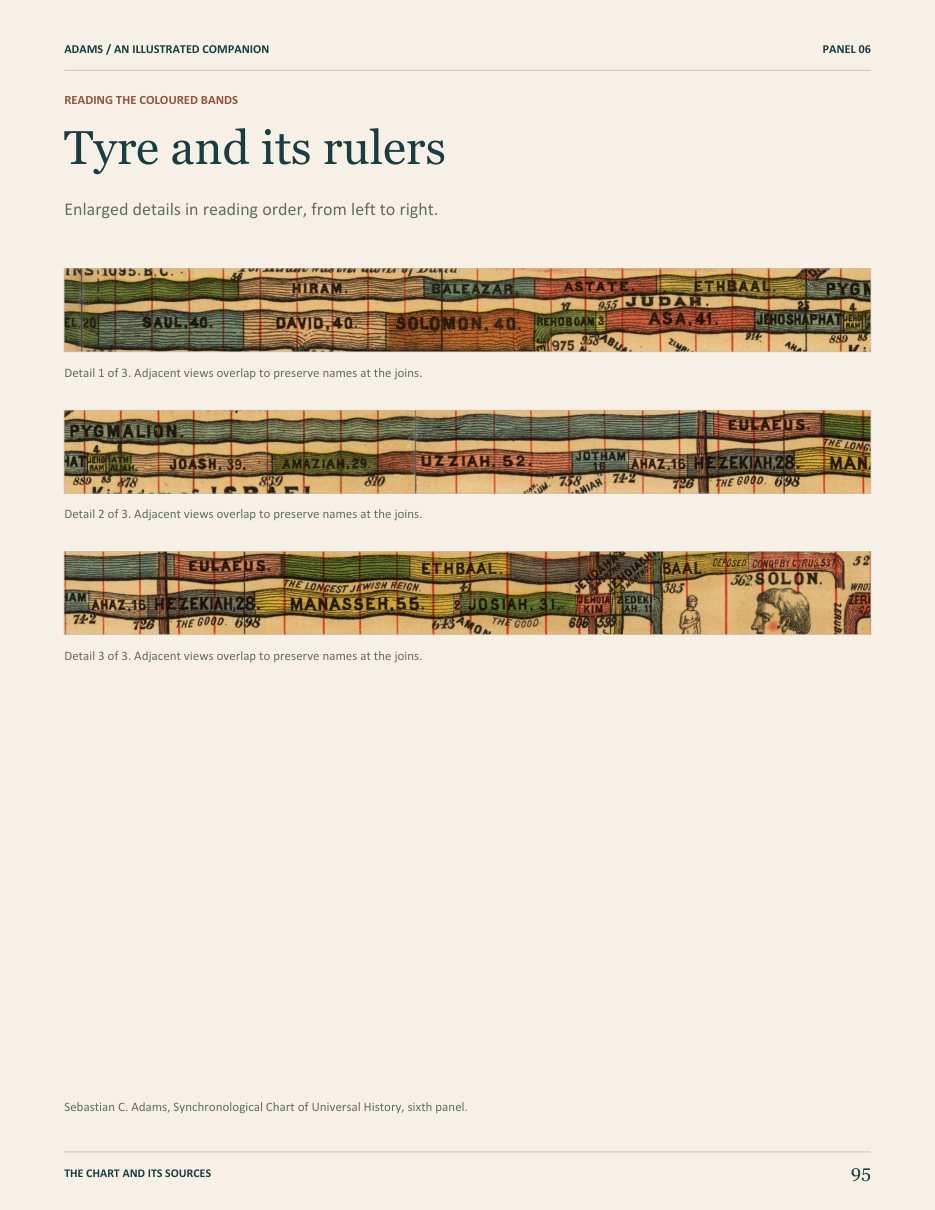 Tyre and its rulers
What you'll find
- Adams' original wording, transcribed with his own spelling
- King James quotations checked word for word (19 in this book)
- Enlarged details of the chart, each with its caption and explanation
- The books Adams relied on, identified and compared with his text
- The complete panel 6, ready to print at large size (9 sheets, US Letter or A4, about 55 x 62 cm once assembled)
Print and study
You may print the pages for your own study, your family or your classroom, as often as you need. Corrections and improvements to this edition are sent free to buyers. Please do not share or resell the file.
Use it beside the chart itself: Panel 6 on adamschart.org lets you zoom into every scene the book explains.
Contents
- Kings, Prophets and Empiresp. 6
- Reading across the centuriesp. 7
- David faces Goliathp. 9
- David and the Psalmsp. 10
- Forty years as kingp. 11
- War, rebellion and the altarp. 12
- Solomon and the books of wisdomp. 13
- Solomon’s templep. 14
- The dimensions of the housep. 15
- A temple built, restored and lostp. 16
- Zerubbabel’s temple and Herod’s enlargementp. 17
- The kingdom dividedp. 18
- Israel: the first royal housesp. 19
- Israel: Jehu to Hosheap. 20
- Judah: Rehoboam to Athaliahp. 21
- Judah: restoration and the templep. 22
- Judah: the final kingsp. 23
- Samuel, Kings and Chroniclesp. 24
- Two lines from Davidp. 25
- A genealogy and a royal successionp. 26
- Hosea and Isaiahp. 27
- The sign on Ahaz’s dialp. 28
- Jonah, Joel and Amosp. 29
- Micah and Nahump. 30
- Zephaniah, Habakkuk and Obadiahp. 31
- Jeremiah and Lamentationsp. 32
- The successive deportationsp. 33
- The end of the two kingdomsp. 34
- Daniel and Ezekiel in exilep. 35
- Nebuchadnezzar’s dreamp. 36
- The kingdoms named beside the imagep. 37
- A lion with eagle’s wingsp. 38
- The image in the plain of Durap. 39
- Belshazzar’s feastp. 40
- How was the writing read?p. 41
- The wording in Calmetp. 42
- Cyrus and the returnp. 43
- The prophets and the rebuildingp. 44
- Samaria and the neighbours of the buildersp. 45
- Ezra, Nehemiah and the continuationp. 46
- At the continuation of the chartp. 47
- Judah, Israel and Syriap. 48
- Kingship and the high priestsp. 49
- Engines before the wallsp. 50
- The crow at the wallp. 51
- The ram and the movable towerp. 52
- A dictionary’s illustrationsp. 53
- The kings of Babylonp. 54
- Babylon: the printed datesp. 55
- Babylon: the printed datesp. 56
- The Scythians and Cyrusp. 57
- Tyre and the Phoenician kingsp. 58
- Damascus between Israel and Assyriap. 59
- Seed beneath the ploughsharep. 60
- Egypt from Shishak to Amasisp. 61
- Psammetichus and the end of independent Egyptp. 62
- Two histories of Assyria on one chartp. 63
- The inscription-based royal listp. 64
- The winged human-headed lionp. 65
- Sennacherib on his thronep. 66
- An archer and a second soldierp. 67
- Books of clay at Calah and Ninevehp. 68
- Biblical royal names in inscriptionsp. 69
- The eclipse and the Assyrian canonp. 70
- Zoroaster in competing chronologiesp. 71
- From Media to Persiap. 72
- Lydia, Sardis and the fall of Croesusp. 73
- Solon and Aesop before Croesusp. 74
- Sparta’s two royal housesp. 75
- The Spartan senate: sixty or thirty?p. 76
- Athens: kings and archonsp. 77
- Draco, Solon and the Pisistratidsp. 78
- Homer and the seven citiesp. 79
- Greek weapons and the lawgiverp. 80
- Counting by Olympiadsp. 81
- Thales, Sappho and the smaller Greek noticesp. 82
- The squares beside Pythagorasp. 83
- Macedonia before the great expansionp. 84
- Latium, Alba Longa and the Tiberp. 85
- Romulus and Remusp. 86
- Rome’s kings and the regal totalp. 87
- Dido and the Carthaginian branchp. 88
- China’s kings and the beginning of the annalsp. 89
- The Chinese historian and philosophersp. 90
- The temple of Diana at Ephesusp. 91
- Aeschylus at the panel’s edgep. 92
- The Chaldaeo-Babylonian branchp. 93
- Babylon as a planned squarep. 94
- The wheeled war chariotp. 95
- A Persian soldier and a Median soldierp. 96
- Belesis and the era of Nabonassarp. 97
- The divided kingdomsp. 98
- The ancestry and century rulerp. 99
- Tyre and its rulersp. 100
- Repeated royal chronology and Syrian noticesp. 101
- Egyptian royal successionp. 102
- Traditional Assyria and the later empirep. 103
- Lydia and Croesusp. 104
- Lydia and Croesusp. 105
- Sparta and its two royal linesp. 106
- Sparta and its two royal linesp. 107
- Athens and the archonsp. 108
- Athens and the archonsp. 109
- Carthage and its foundationp. 110
- Chinese rulers and annalsp. 111
- Chinese rulers and annalsp. 112
- The lower century labelsp. 113
- Original readings: Second Samuel, David and Goliathp. 114
- Original readings: The divided kingdoms — continuedp. 115
- Original readings: The divided kingdoms — continuedp. 116
- Original readings: Proverbs, Ecclesiastes and the Song — continuedp. 117
- Original readings: Nahum and the northern kingdom’s end — continuedp. 118
- Original readings: Jeremiah and the final kings of Judahp. 119
- Original readings: The temple of Diana at Ephesusp. 120
- Original readings: The ancestry and century rulerp. 121
- Original readings: Machines used in siege warfarep. 122
- Original readings: Repeated royal chronology and Syrian noticesp. 123
- Original readings: War chariot and Assyrian drill plowp. 124
- Original readings: Egyptian royal succession — continuedp. 125
- Original readings: Assyrian kings from inscriptions — continuedp. 126
- Original readings: Assyrian deity and Sennacheribp. 127
- Original readings: Babylon and the Chaldaean empire — continuedp. 128
- Original readings: Traditional Assyria and the later empire — continuedp. 129
- Original readings: Kings of Israel and Judah: comparison list — continuedp. 130
- Original readings: The Median succession — continuedp. 131
- Original readings: Persia and Cyrus at the boundaryp. 132
- Original readings: Athens and the archonsp. 133
- Original readings: Athens and the archons — continuedp. 134
- Original readings: Hesiod, Homer and the disputed birthplace — continuedp. 135
- Original readings: Macedonian succession — continuedp. 136
- Original readings: Rome’s foundation and kingsp. 137
- Original readings: Rome’s foundation and kings — continuedp. 138
- Original readings: Latium, Alba Longa and the boat — continuedp. 139
- Original readings: Chinese rulers and annals — continuedp. 140
- Original readings: The Chinese portraits and Sematsin — continuedp. 141
- Original readings: The plan of Babylon across the boundaryp. 142
- Original readings: The Babylonian list continuing from panel five — continuedp. 143
- Books and editionsp. 144
- Books and editionsp. 145
- Books and editionsp. 146
- Further referencesp. 147
Questions
How do I receive the book?
Right after payment, your download link appears on screen and is sent to your email address.
Is this the printed chart?
No. This is a PDF book that explains the chart. The complete chart itself is free to explore on adamschart.org.
Which devices can open it?
Any computer, tablet or phone with a PDF reader. Pages are US Letter size and print well on A4 with "fit to page".
A question or a correction?
Write to [email protected].