
Heritage Timelines · Study Edition · Panel 5
The Exodus
Moses and the Age of the Judges · c. 1700–1100 BC
A study of Panel 5 of Adams' chart: The Exodus and the Age of the Judges
- 116 pages
- 81 illustrations
- 107 sections
- PDF · 16.0 MB
- + panel 5 to print
This book walks through panel 5 of Adams' chart, c. 1700–1100 BC, detail by detail: The Exodus; From Egypt to the judges; The family of Moses; The burning bush; The ten plagues; A people brought out; The books beside the ruler; Counting the camp. Each page sets Adams' own words and pictures beside the sources behind them.
Digital PDF. Read it on any screen, zoom into every detail, print the pages you need. Also included: the complete panel 5 to print and assemble (9 sheets, US Letter or A4, about 55 x 62 cm once assembled). No printed book or chart is shipped.
Look inside
Real pages from the book. Tap a page to enlarge it.
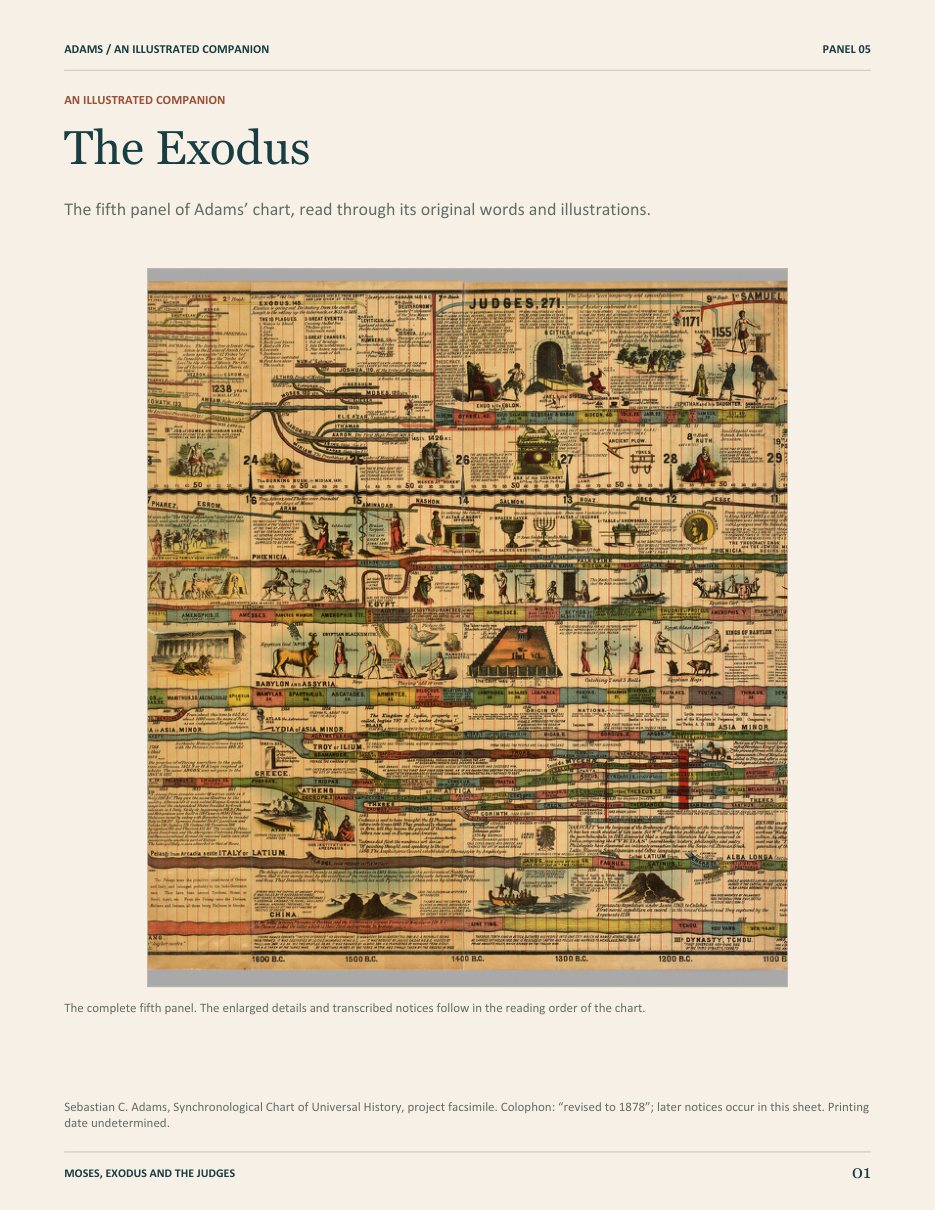 The Exodus
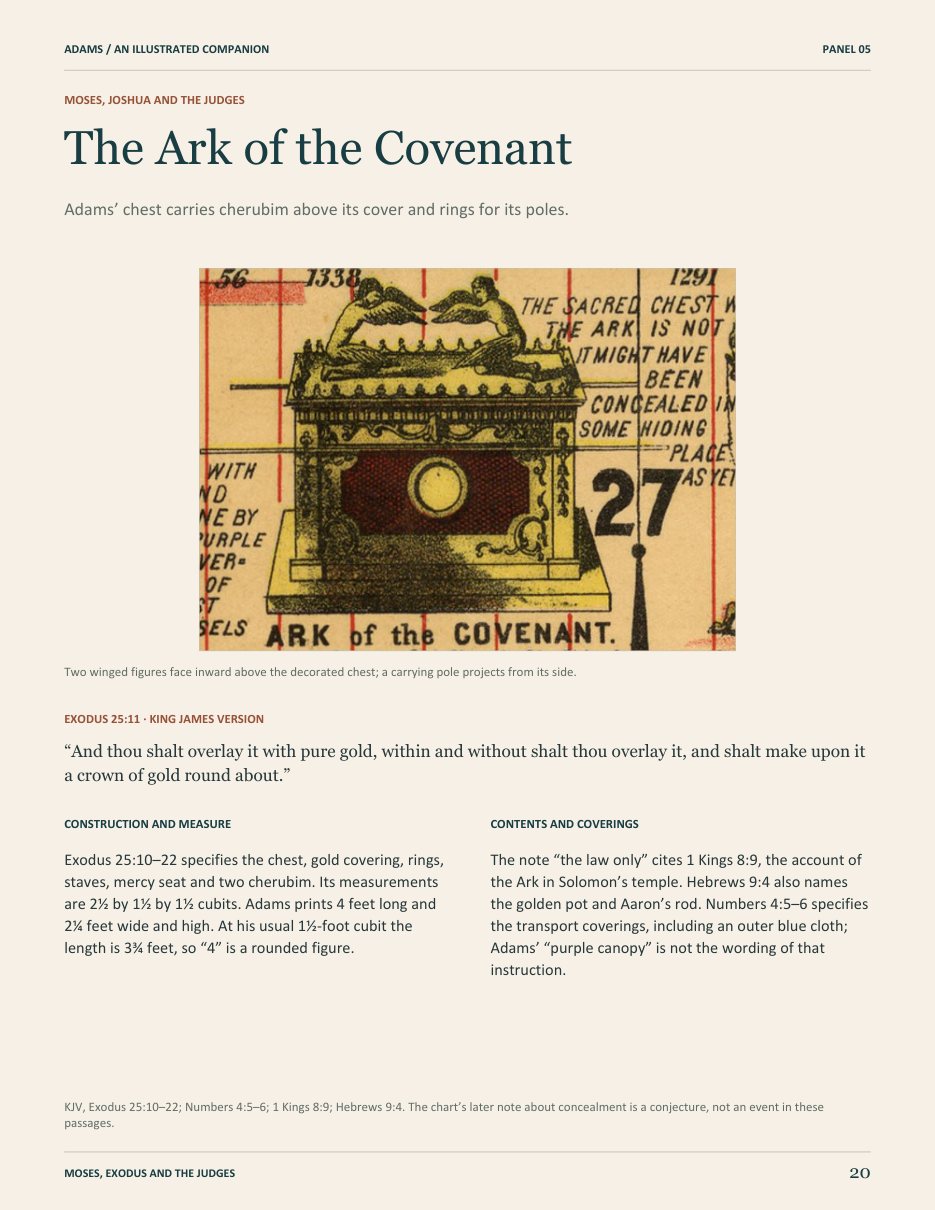 The Ark of the Covenant
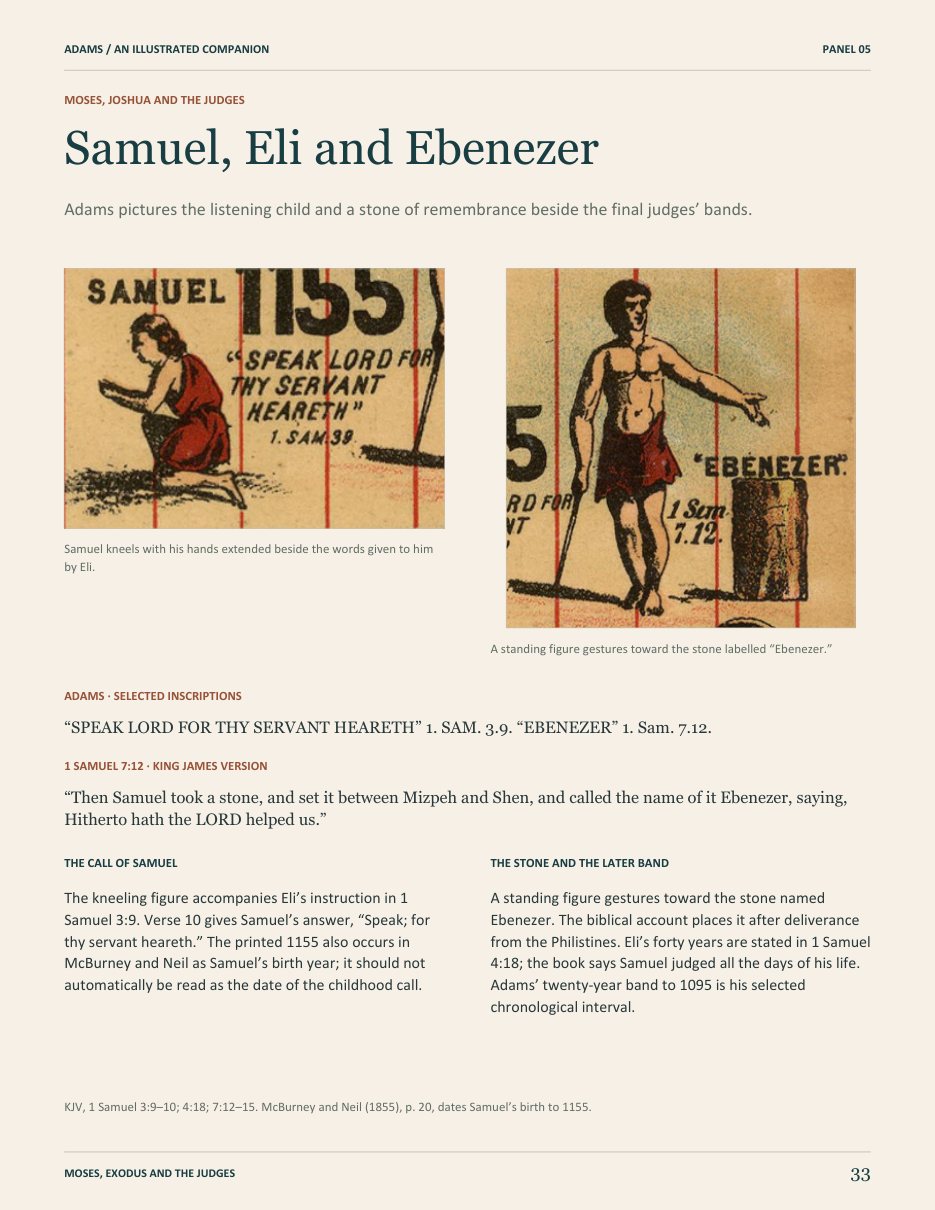 Samuel, Eli and Ebenezer
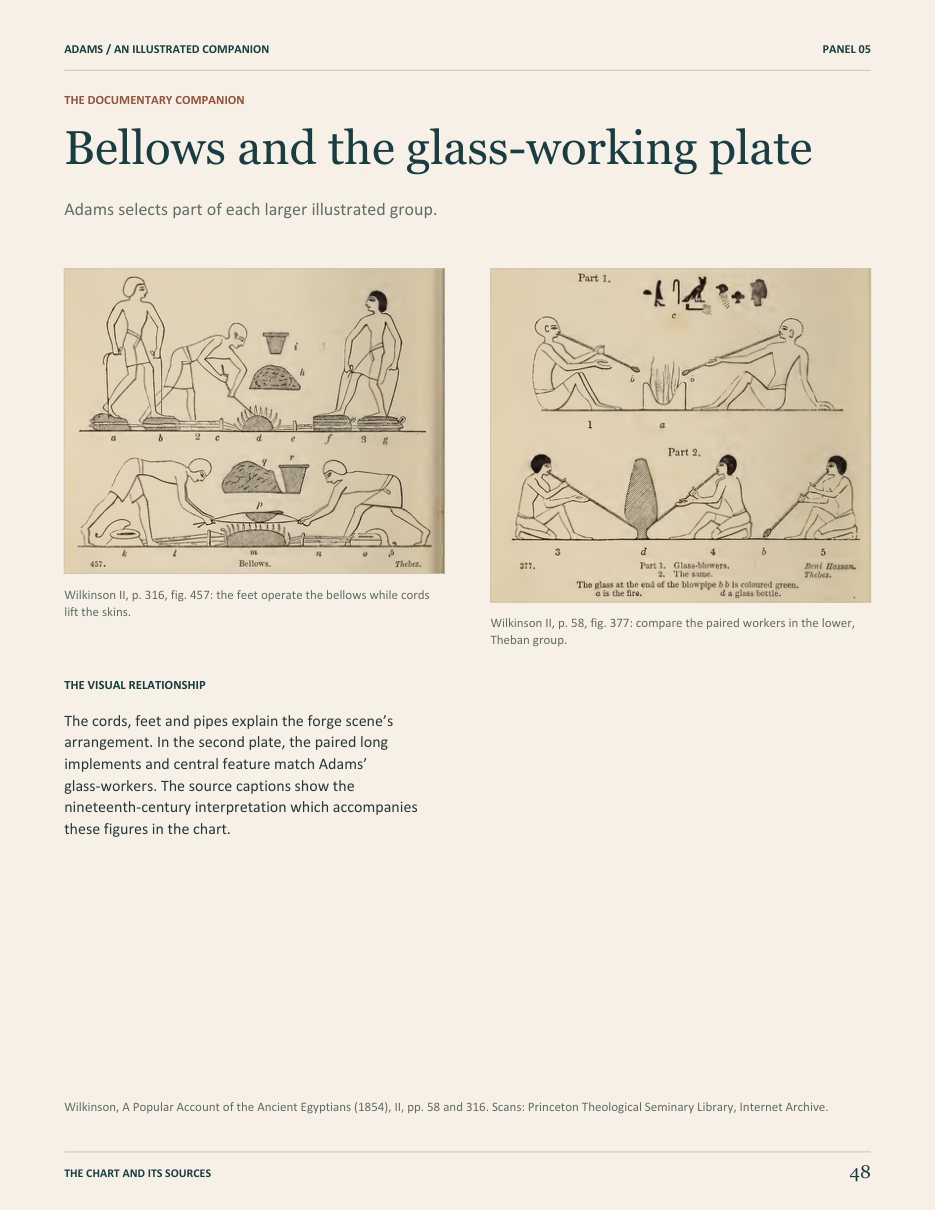 Bellows and the glass-working plate
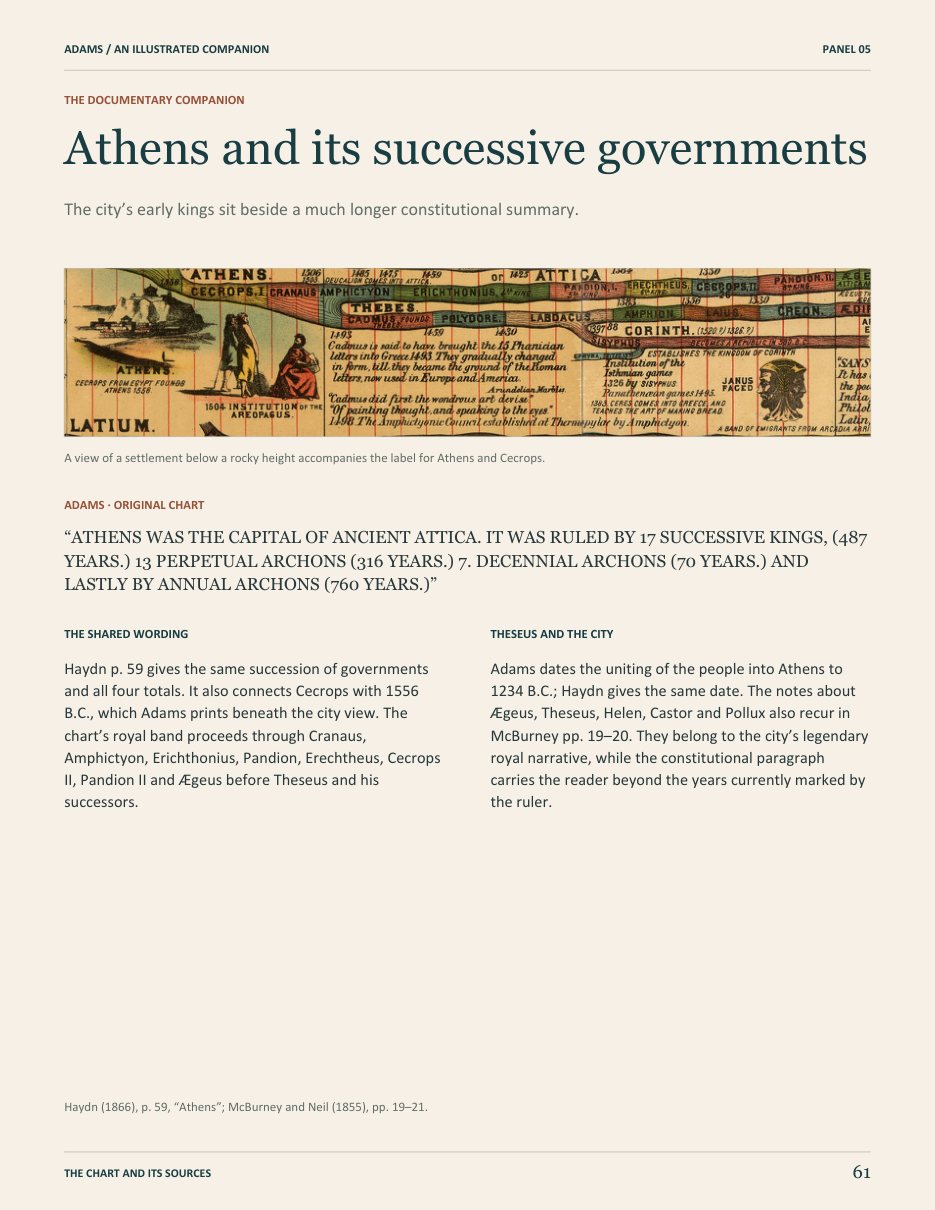 Athens and its successive governments
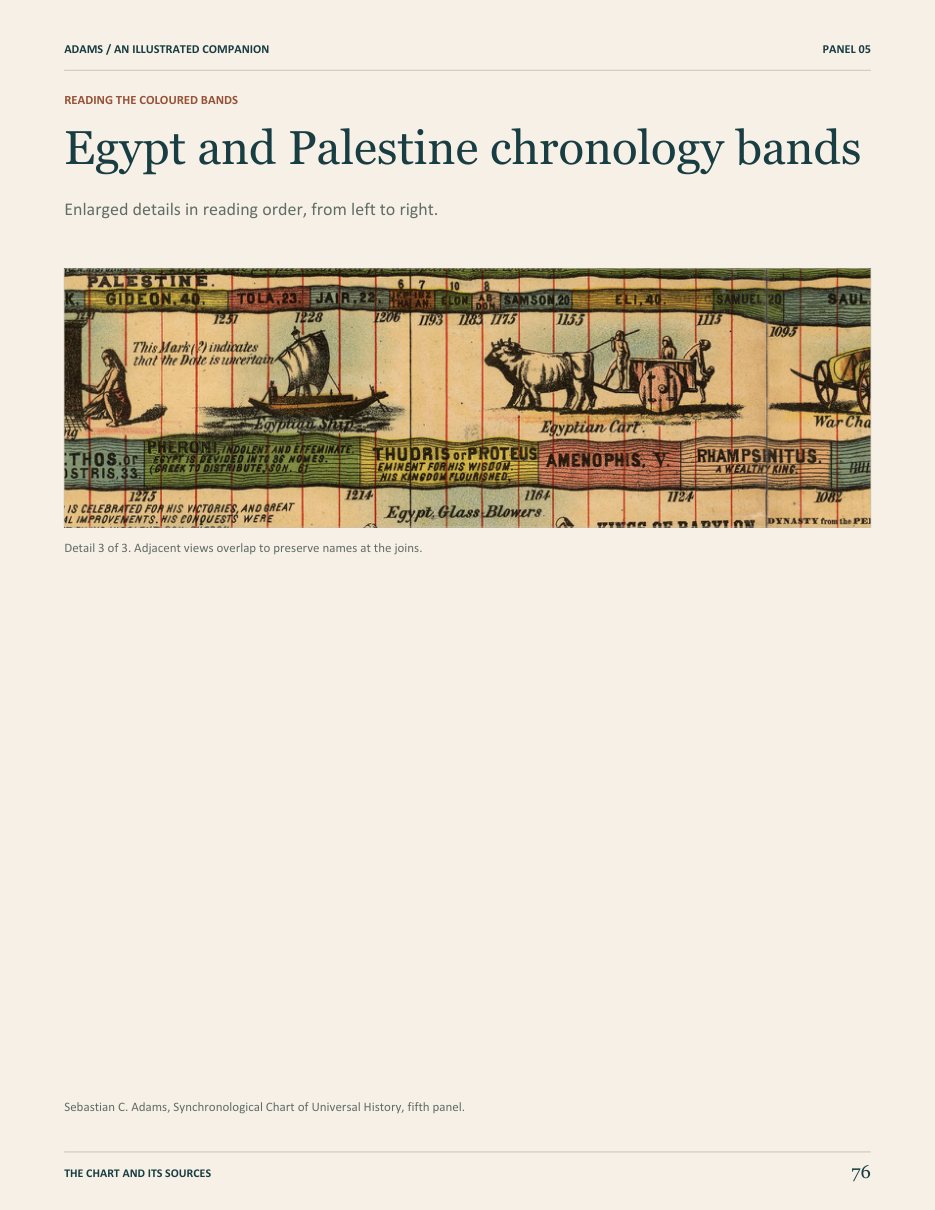 Egypt and Palestine chronology bands
What you'll find
- Adams' original wording, transcribed with his own spelling
- King James quotations checked word for word (21 in this book)
- Enlarged details of the chart, each with its caption and explanation
- The books Adams relied on, identified and compared with his text
- The complete panel 5, ready to print at large size (9 sheets, US Letter or A4, about 55 x 62 cm once assembled)
Print and study
You may print the pages for your own study, your family or your classroom, as often as you need. Corrections and improvements to this edition are sent free to buyers. Please do not share or resell the file.
Use it beside the chart itself: Panel 5 on adamschart.org lets you zoom into every scene the book explains.
Contents
- The Exodusp. 6
- How to read this panelp. 7
- From Egypt to the judgesp. 9
- The family of Mosesp. 10
- The burning bushp. 11
- The ten plaguesp. 12
- A people brought outp. 13
- The books beside the rulerp. 14
- Counting the campp. 15
- Aaron, Miriam and the priesthoodp. 16
- The law and the golden calfp. 17
- Forty years in the wildernessp. 18
- The brazen serpentp. 19
- Joshua after Mosesp. 20
- The tabernacle and its courtp. 21
- The altar and the laverp. 22
- Lamp and incensep. 23
- The table of shewbreadp. 24
- The Ark of the Covenantp. 25
- Plough, yokes and lampp. 26
- Six cities of refugep. 27
- The years of the judgesp. 28
- Othniel, Ehud and Shamgarp. 29
- Deborah, Barak and Jaelp. 30
- Gideon’s signs and stratagemp. 31
- From Gideon to Jairp. 32
- Jephthah and his daughterp. 33
- The word at the fordsp. 34
- Ibzan, Elon and Abdonp. 35
- Samson and the gates of Gazap. 36
- Ruth among the harvestersp. 37
- Samuel, Eli and Ebenezerp. 38
- The Lord as kingp. 39
- The succession of the high priestsp. 40
- The line toward Davidp. 41
- Job beside the family bandsp. 42
- The family branches at the edgep. 43
- Toward the songs of Davidp. 44
- Egypt’s rulers beside the Exodusp. 45
- The brickmakersp. 46
- Harvest, temple and chariotp. 47
- Spinning and weavingp. 48
- The figures in Wilkinson’s bookp. 49
- Air for the forgep. 50
- Apis, the bird and the hogsp. 51
- The glass-blowersp. 52
- Bellows and the glass-working platep. 53
- Hands, counters and flying ballsp. 54
- A ship and an ox-cartp. 55
- Ball-players and the cartp. 56
- A head from a Tyrian coinp. 57
- The long Assyrian successionp. 58
- Assyria in Rawlinson’s accountp. 59
- The Babylonian list in comparisonp. 60
- The list beside Sayce’s tablep. 61
- Lydia, Phrygia and Atlasp. 62
- Troy and the wooden horsep. 63
- Greek history and the marble recordp. 64
- The Greek kingdoms branchp. 65
- Athens and its successive governmentsp. 66
- Council, games and assemblyp. 67
- Cadmus and the alphabetp. 68
- Thebes and the two kings of Spartap. 69
- Corinth, from Sisyphus to later historyp. 70
- The flood of Deucalionp. 71
- Jason’s voyage and Apollo’s templep. 72
- Sanskrit and the Vedasp. 73
- Jones’ first editionp. 74
- A poet and an Indian traditionp. 75
- Italy and the Pelasgian traditionp. 76
- Janus, Latium and Alba Longap. 77
- China’s band and a claim about first contactp. 78
- The time ruler and ancestry ribbonp. 79
- Egypt and Palestine chronology bandsp. 80
- Egypt and Palestine chronology bandsp. 81
- Babylon and Assyria successionp. 82
- Persia, Lydia and Rawlinson’s nationsp. 83
- Greek kingdoms and Troyp. 84
- Greek kingdoms and Troyp. 85
- Deucalion and the Argonautic expeditionp. 86
- Deucalion and the Argonautic expeditionp. 87
- Chinese dynastic band and noticesp. 88
- Chinese dynastic band and noticesp. 89
- Corinth and Theseusp. 90
- Bottom century labelsp. 91
- Original readings: Israelite families across the seamp. 92
- Original readings: Exodus and the following booksp. 93
- Original readings: Exodus and the following books — continuedp. 94
- Original readings: Job of Idumeap. 95
- Original readings: The Judges and their chronology — continuedp. 96
- Original readings: Gideon’s signs and stratagemp. 97
- Original readings: The Ark of the Covenantp. 98
- Original readings: The golden calf and the Pharaoh questionp. 99
- Original readings: Head of Baal on a Tyrian coinp. 100
- Original readings: Egyptian ship and cartp. 101
- Original readings: Egypt and Palestine chronology bands — continuedp. 102
- Original readings: Egyptian ball play, glass blowing and hogsp. 103
- Original readings: Kings of Babylon from inscriptions — continuedp. 104
- Original readings: Babylon and Assyria succession — continuedp. 105
- Original readings: Persia, Lydia and Rawlinson’s nations — continuedp. 106
- Original readings: Greek kingdoms and Troy — continuedp. 107
- Original readings: Greek kingdoms and Troy — continuedp. 108
- Original readings: Athens, Cadmus and early institutionsp. 109
- Original readings: Sanskrit, the Vedas and Latiump. 110
- Original readings: Italy and the Pelasgians — continuedp. 111
- Original readings: Psalms at the right boundaryp. 112
- Original readings: Aeneas, Alba Longa and Italian notesp. 113
- Books and editionsp. 114
- Books and editionsp. 115
- Further referencesp. 116
Questions
How do I receive the book?
Right after payment, your download link appears on screen and is sent to your email address.
Is this the printed chart?
No. This is a PDF book that explains the chart. The complete chart itself is free to explore on adamschart.org.
Which devices can open it?
Any computer, tablet or phone with a PDF reader. Pages are US Letter size and print well on A4 with "fit to page".
A question or a correction?
Write to [email protected].