
Heritage Timelines · Study Edition · Panel 4
Abraham and the Early Empires
Patriarchs and the First Civilizations · c. 2300–1700 BC
A study of Panel 4 of Adams' chart: Abraham and the Early Empires
- 96 pages
- 46 illustrations
- 89 sections
- PDF · 8.1 MB
- + panel 4 to print
This book walks through panel 4 of Adams' chart, c. 2300–1700 BC, detail by detail: Abraham and the Early Empires; From Shem to Terah; From dispersion to the call; Lives that overlap; The call of Abram; The branches of Terah; A journey given years; The nine kings and Melchizedek. Each page sets Adams' own words and pictures beside the sources behind them.
Digital PDF. Read it on any screen, zoom into every detail, print the pages you need. Also included: the complete panel 4 to print and assemble (9 sheets, US Letter or A4, about 55 x 62 cm once assembled). No printed book or chart is shipped.
Look inside
Real pages from the book. Tap a page to enlarge it.
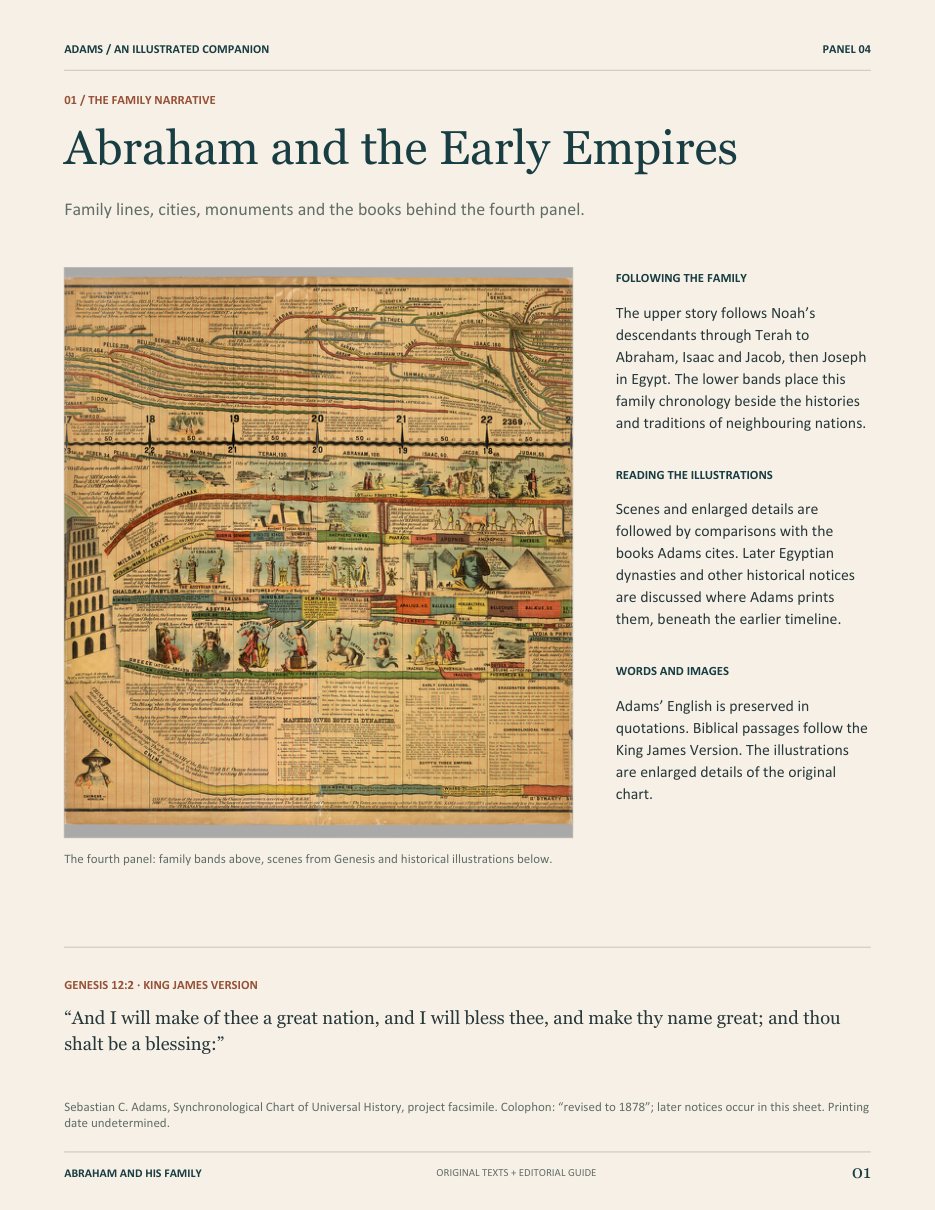 Abraham and the Early Empires
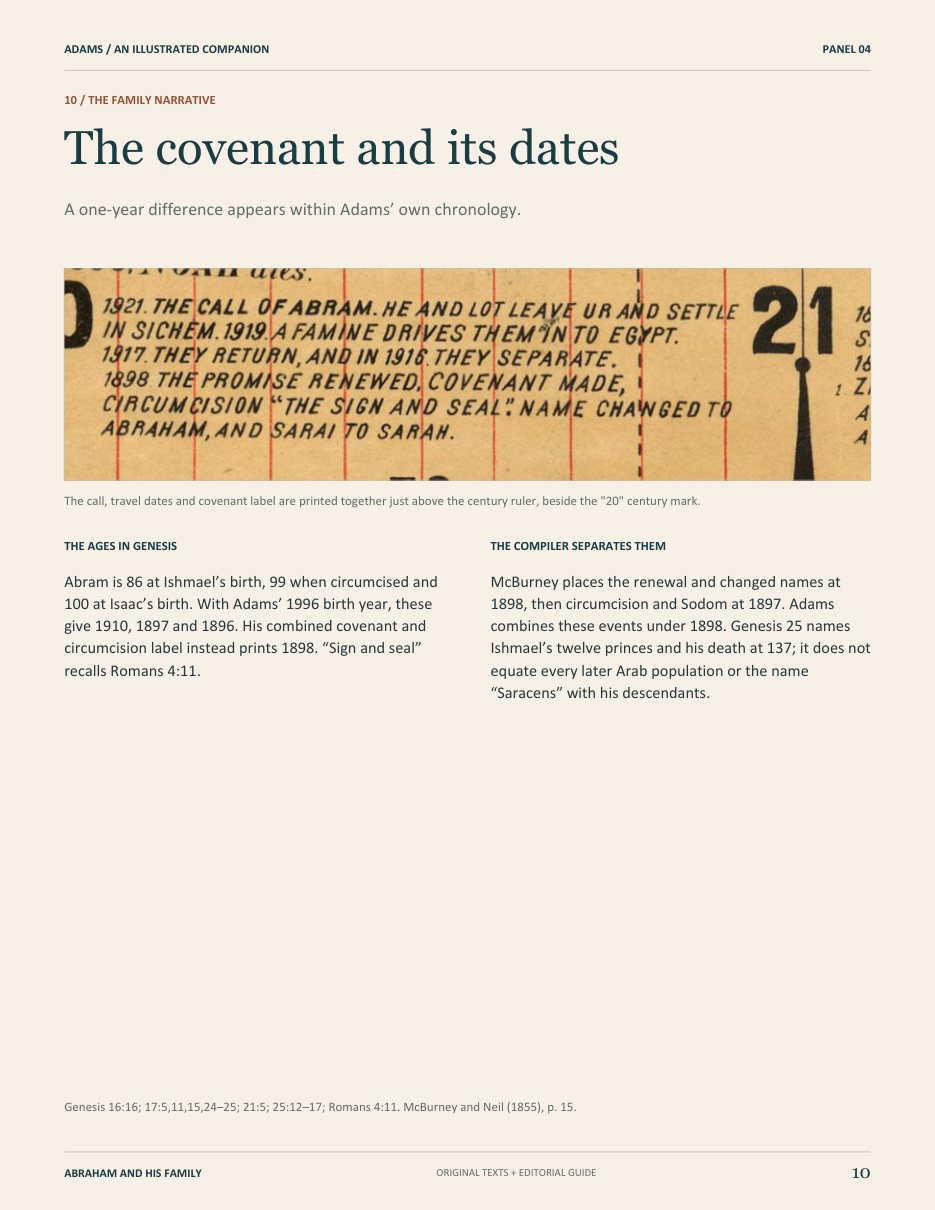 The covenant and its dates
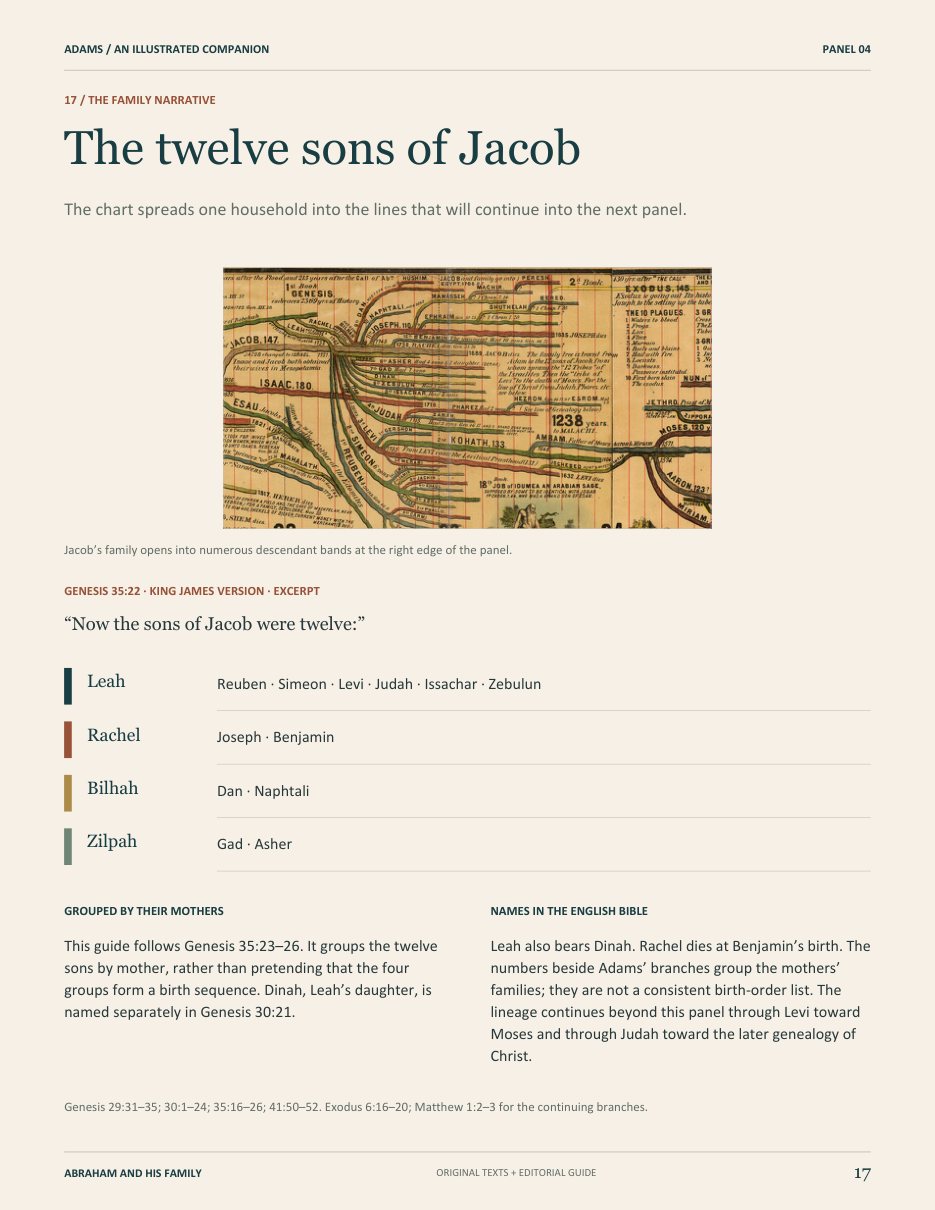 The twelve sons of Jacob
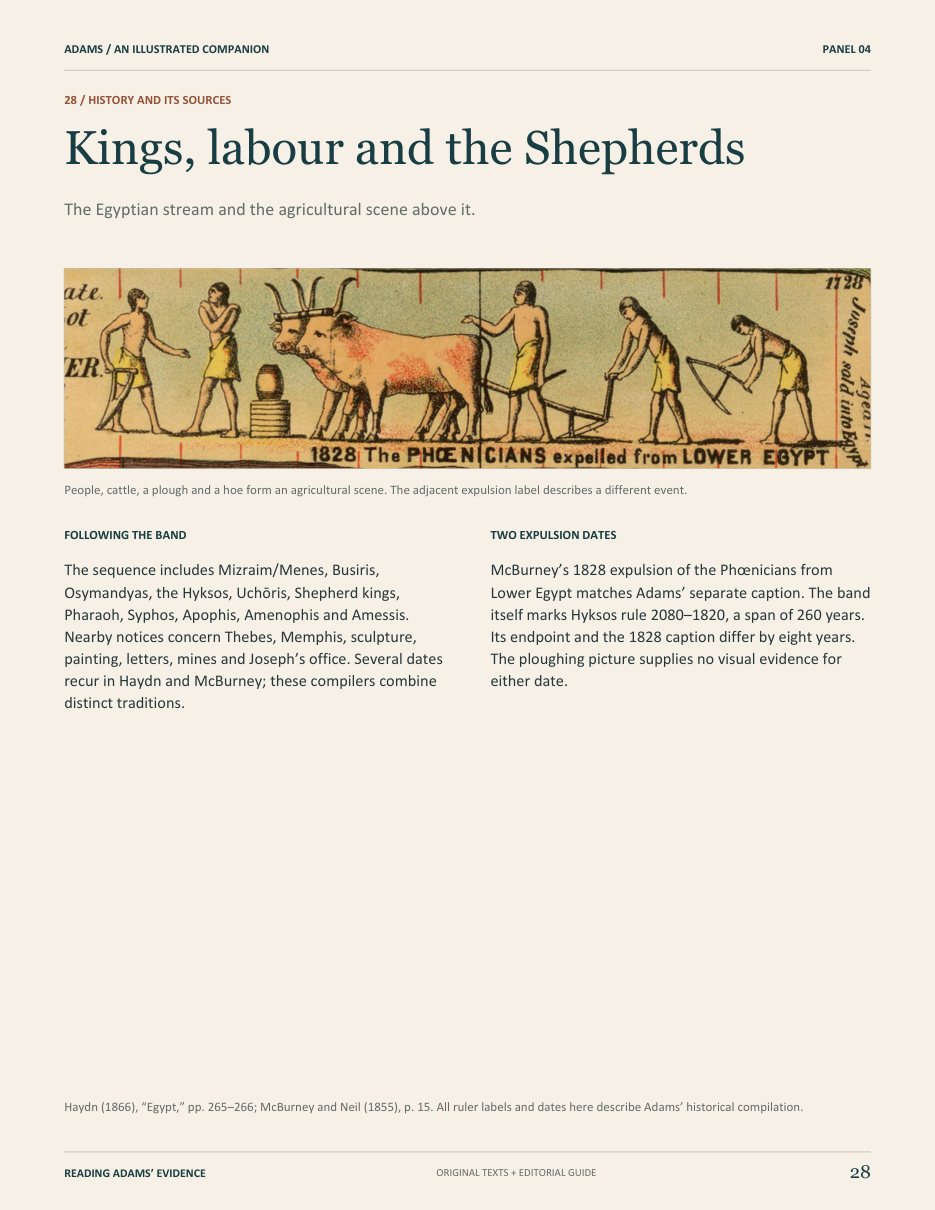 Kings, labour and the Shepherds
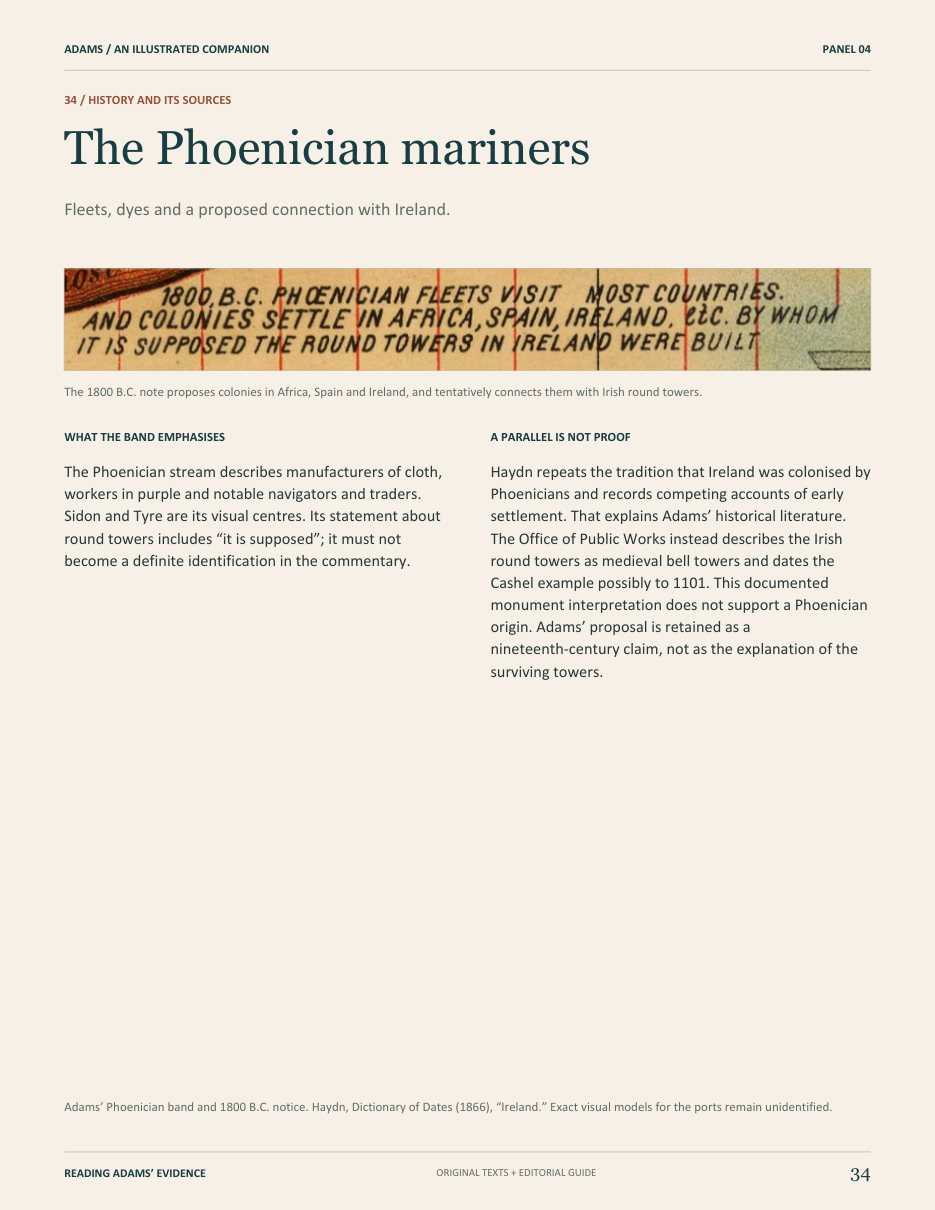 The Phoenician mariners
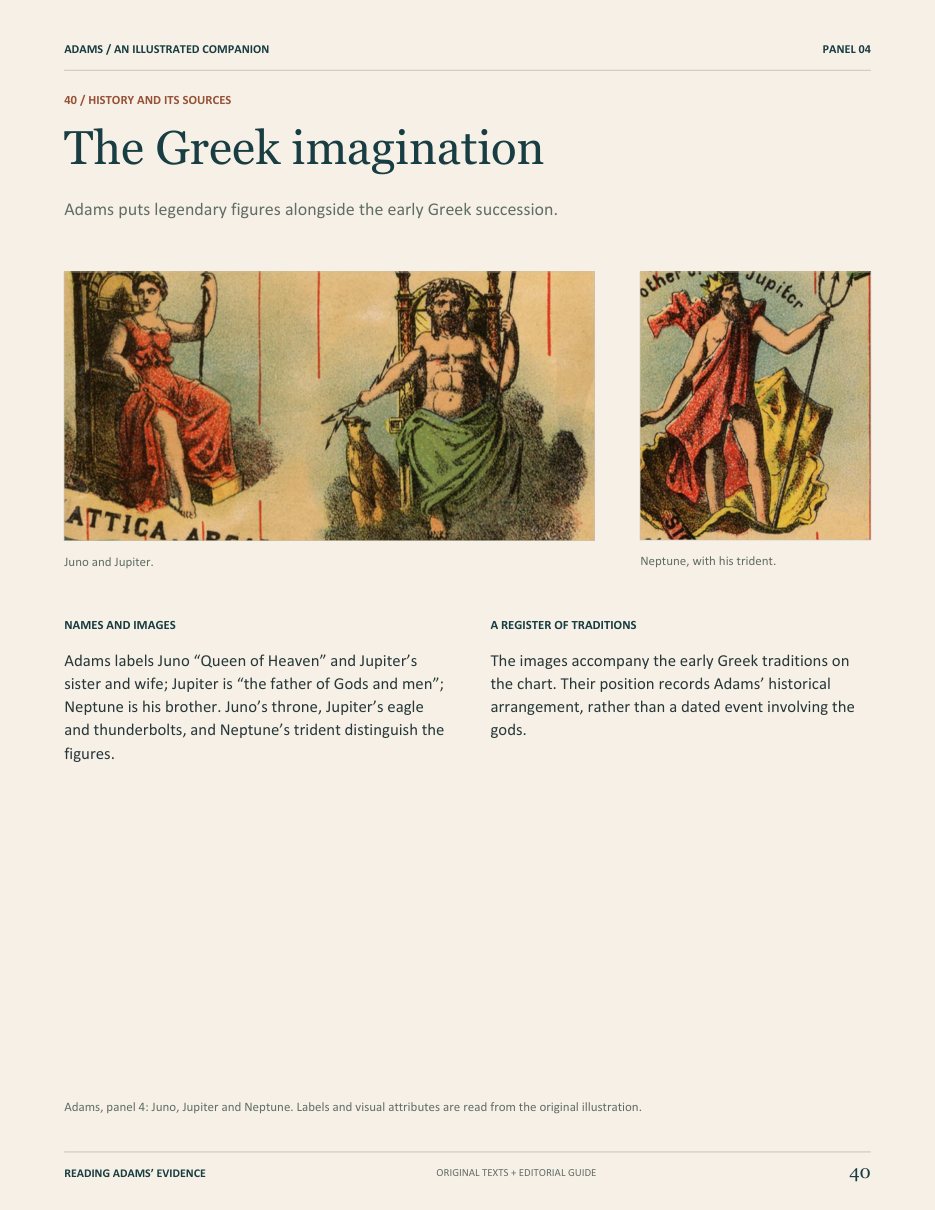 The Greek imagination
What you'll find
- Adams' original wording, transcribed with his own spelling
- King James quotations checked word for word (14 in this book)
- Enlarged details of the chart, each with its caption and explanation
- The books Adams relied on, identified and compared with his text
- The complete panel 4, ready to print at large size (9 sheets, US Letter or A4, about 55 x 62 cm once assembled)
Print and study
You may print the pages for your own study, your family or your classroom, as often as you need. Corrections and improvements to this edition are sent free to buyers. Please do not share or resell the file.
Use it beside the chart itself: Panel 4 on adamschart.org lets you zoom into every scene the book explains.
Contents
- Abraham and the Early Empiresp. 5
- From Shem to Terahp. 6
- From dispersion to the callp. 7
- Lives that overlapp. 8
- The call of Abramp. 9
- The branches of Terahp. 10
- A journey given yearsp. 11
- The nine kings and Melchizedekp. 12
- Ishmael and Isaacp. 13
- The covenant and its datesp. 14
- Lot and the citiesp. 15
- Moriah and Machpelahp. 16
- Keturah and Esau’s householdsp. 17
- Rebekah at the wellp. 18
- Jacob’s dreamp. 19
- Jacob becomes Israelp. 20
- The twelve sons of Jacobp. 21
- The brothers’ descendantsp. 22
- Joseph into Egyptp. 23
- Seventy and seventy-fivep. 24
- The ruler and the longer storyp. 25
- Ages in the line of descentp. 26
- Titles, ages and a journeyp. 27
- Egypt’s competing datesp. 28
- What the monuments can tellp. 29
- Three empires, several schemesp. 30
- Architecture along the Nilep. 31
- Kings, labour and the Shepherdsp. 32
- The pyramid and the Sphinxp. 33
- The measurements on the platep. 34
- Manetho and the royal listsp. 35
- From Ramessu to the Persiansp. 36
- Sidon and Tyrep. 37
- The Phoenician marinersp. 38
- Babel and the Temple of Belusp. 39
- Nimrod, Asshur and the citiesp. 40
- Three Chaldaean figuresp. 41
- Priests of Babylonp. 42
- Women gathering datesp. 43
- The Greek imaginationp. 44
- Vulcan, centaur and mermaidp. 45
- Inachus and the early Greek kingsp. 46
- Five ages of Greek historyp. 47
- Æsculapius and medicinep. 48
- “Babylon the great”p. 49
- The Assyrian royal streamp. 50
- Semiramis and a missing reservationp. 51
- The Persian streamp. 52
- China and the patriarchsp. 53
- Shin-Nong and Whang Tip. 54
- The Vedas and Puranasp. 55
- The limits of a chronologyp. 56
- Rawlinson’s tablep. 57
- Sources: the family narrativep. 58
- Sources: the historical compilersp. 59
- Sources: monuments and imagesp. 60
- Original readings: Confusion and dispersionp. 61
- Original readings: Terah, Haran and Abrahamp. 62
- Original readings: Ishmael, Isaac and Keturahp. 63
- Original readings: The cave of Machpelahp. 64
- Original readings: Jacob and his childrenp. 65
- Original readings: Jacob goes into Egypt — contextual continuationp. 66
- Original readings: Egyptian architecturep. 67
- Original readings: Inachusp. 68
- Original readings: Egypt’s Three Empiresp. 69
- Original readings: Rawlinson’s chronological tablep. 70
- Original readings: Manetho and Egyptian chronologyp. 71
- Original readings: Manetho and Egyptian chronology - continuedp. 72
- Original readings: 80n greek ages completep. 73
- Original readings: Jacob’s family countp. 74
- Original readings: Assyria: royal succession and four branchesp. 75
- Original readings: Persian successionp. 76
- Original readings: Ruler, fatherhood and decade marksp. 77
- Original readings: Iran’s title and the port cities’ later noticesp. 78
- Illustration catalogue: 01. The complete fourth panelp. 79
- Illustration catalogue: 05. Ishmael, Isaac, Keturah and Esaup. 80
- Illustration catalogue: 10. Jacob’s ladder and the naming of Bethelp. 81
- Illustration catalogue: 15. The Sphinx and pyramids at Gizehp. 82
- Illustration catalogue: 20. The ports of Sidon and Tyrep. 83
- Illustration catalogue: 25. Cultivation in Egypt and the Phoenician-expulsion captionp. 84
- Illustration catalogue: 29. Egyptian bands beneath the patriarchsp. 85
- Illustration catalogue: 34. Upper right: Jacob, Esau and grandchildrenp. 86
- Illustration catalogue: 38. Lower left: Babel, Chaldaea and Greek beginningsp. 87
- Illustration catalogue: 42. Bottom centre: Aesculapius, Manetho and Shin-Nongp. 88
- Illustration catalogue: 46. The extended post-Flood genealogyp. 89
- Illustration catalogue: 52. Three priests with an altar and celestial signsp. 90
- Illustration catalogue: 58. The twelve-row chronological comparisonp. 91
- Illustration catalogue: 64. Aesculapius and the priests of medicinep. 92
- Illustration catalogue: 71. Vulcan, centaur and mermaidp. 93
- Illustration catalogue: 78. Phoenician navigation and the Irish towers claimp. 94
- Illustration catalogue: 85. Agricultural scene with people, cattle and ploughp. 95
- Further referencesp. 96
Questions
How do I receive the book?
Right after payment, your download link appears on screen and is sent to your email address.
Is this the printed chart?
No. This is a PDF book that explains the chart. The complete chart itself is free to explore on adamschart.org.
Which devices can open it?
Any computer, tablet or phone with a PDF reader. Pages are US Letter size and print well on A4 with "fit to page".
A question or a correction?
Write to [email protected].